
Last updated November 22, 2026
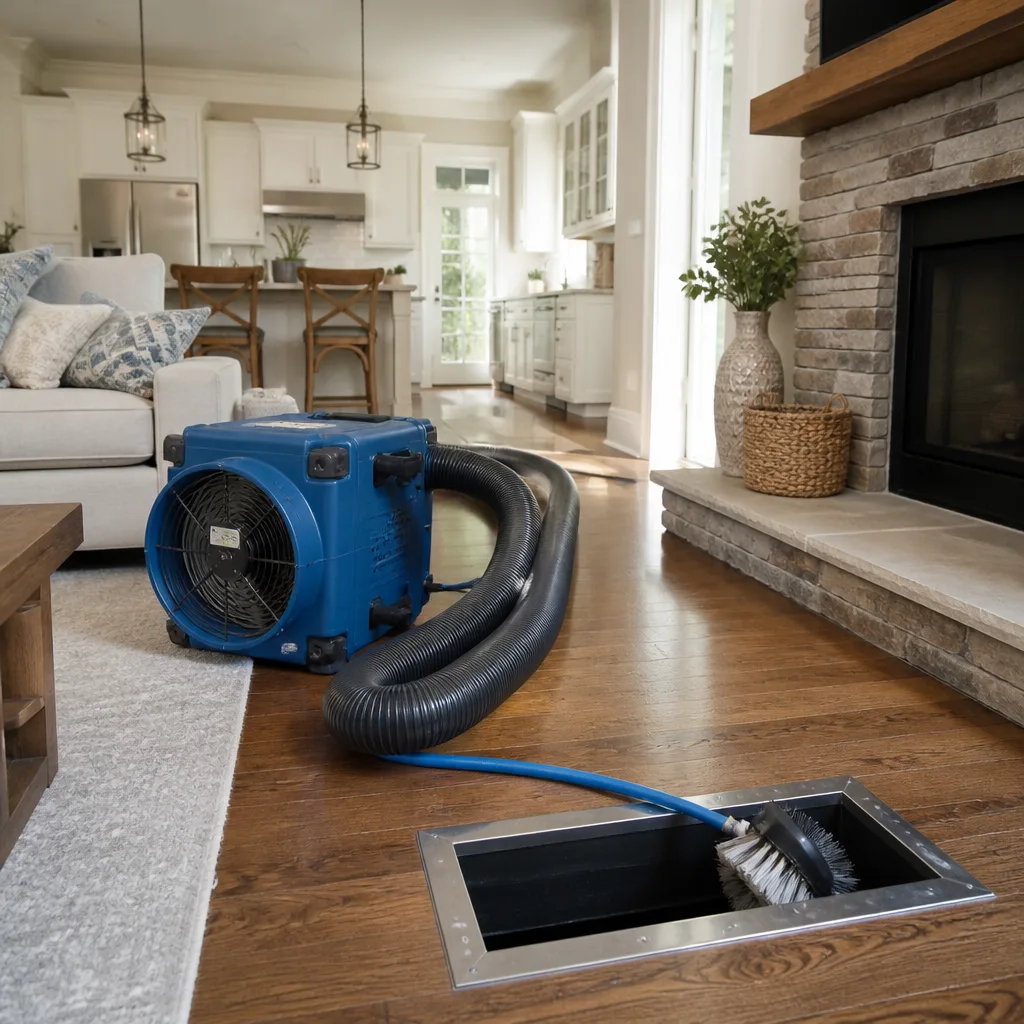 Whole-home duct cleaning
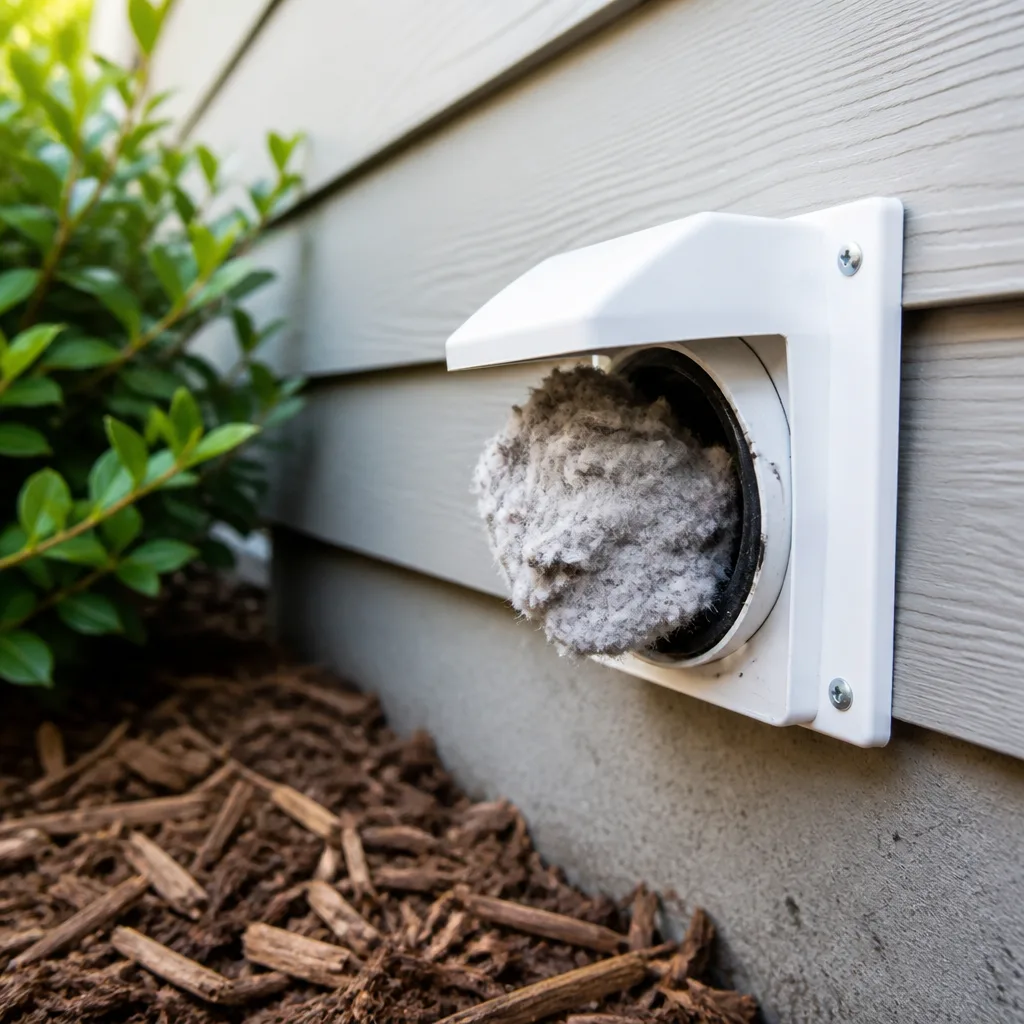 Dryer vent cleaning
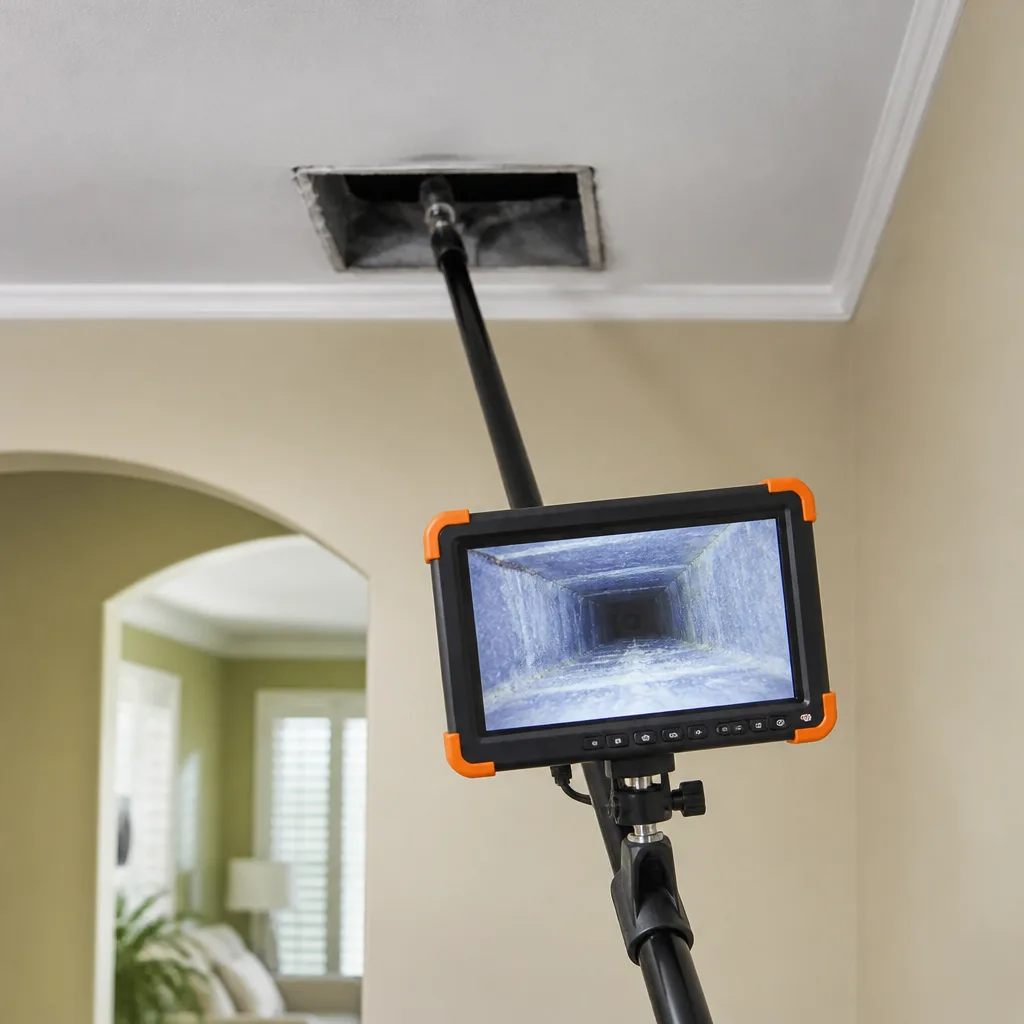 Camera inspection
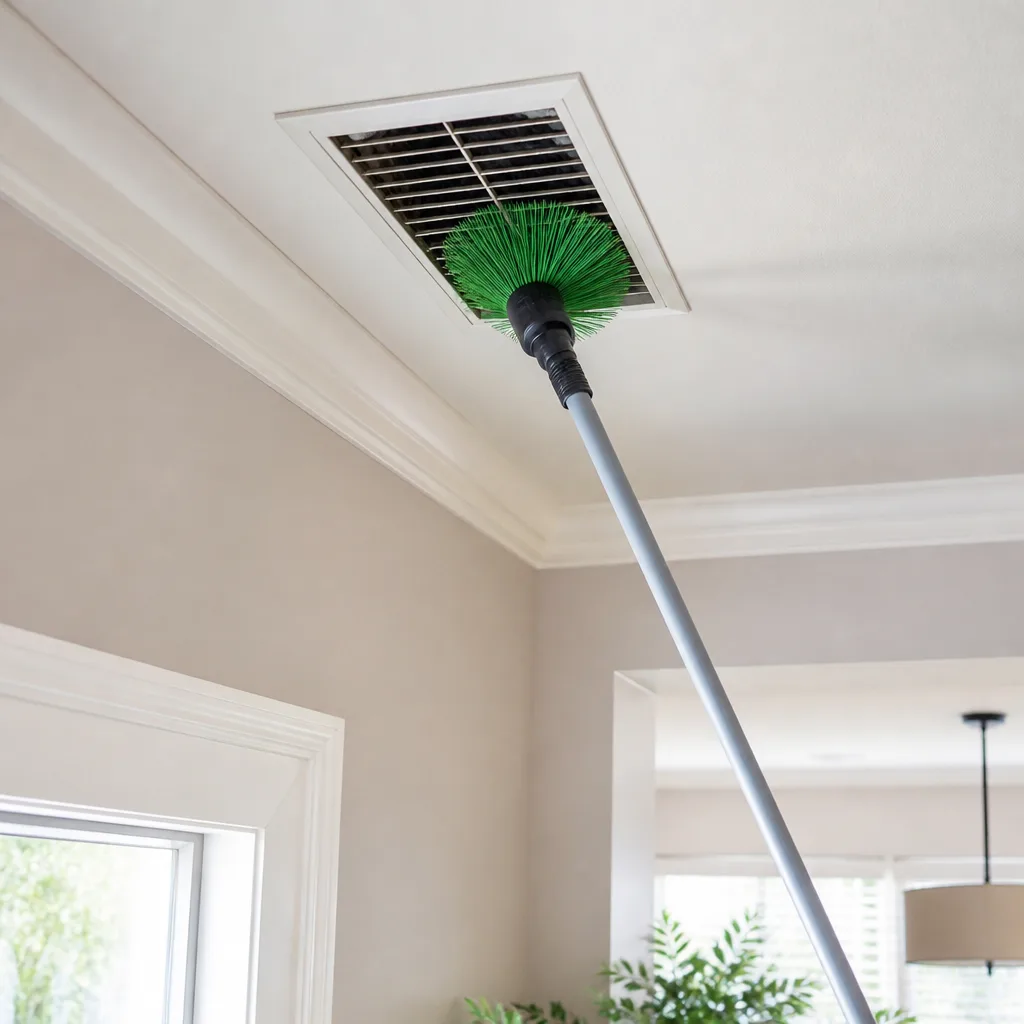 Sanitizing & deodorizing
Whole-system duct and dryer vent check with before-and-after photos - you see exactly what came out of your vents
That "$99 whole-house special" is a bait ad - the real number appears once they are in your hallway, or the "clean" is a shop-vac at the register. We photograph the inside of your ducts before and after instead.
Air Duct Cleaning Troubleshooting in Mott Haven: Common Problems and How to Fix Them
A whistling register and a musty smell look like two separate problems. In a pre-war Mott Haven building, they’re often the same collapsed flex duct doing both. That’s the thing about duct trouble: symptoms that seem unrelated usually trace back to one failure point, and the wrong fix addresses the smell while the real problem keeps running. This guide teaches you to read those signals before you call anyone. You’ll learn which symptoms point to which failures, what a Mott Haven apartment’s stack effect does to your ductwork, when to reach for a filter versus a camera, and how to document what you’re hearing and smelling so the diagnostic conversation is faster and more useful.
Quick Answer
Most air duct problems in Mott Haven trace to one of five causes: collapsed or disconnected flex duct, failed seals at joints and boots, a saturated filter or blower, contamination built up inside the trunk line, or negative pressure pulling unfiltered air through gaps. Diagnosing the cause, not just the symptom, is what makes a repair stick. A professional uses camera inspection and pressure testing to confirm which of these you’re dealing with before recommending any work.
Styles & brands we work with
- Whole-home duct cleaning
- Dryer vent cleaning
- Camera inspection
- Sanitizing & deodorizing
Table of Contents
- Symptom-to-Cause: What Your Ducts Are Telling You
- How Stack Effect in Mott Haven Walk-Ups Pulls Dust Into Your Ducts
- What You Can Check Yourself vs. What Needs a Camera
- How to Document Duct Problems Before the Technician Arrives
- What a Real Pressure Test Result Looks Like
- Why Sealing Matters More Than Cleaning Alone
- The Dryer Vent Connection You Might Be Missing
- When a Symptom Means Stop and Call
Symptom-to-Cause: What Your Ducts Are Telling You
Duct problems announce themselves through specific, repeatable signals. Learning to match the signal to the likely cause is the single most useful thing you can do before a technician walks in. Here’s the mapping we’ve worked out over years of diagnostics in Mott Haven buildings.
- Musty or stale odor from one or two registers only: usually local contamination or a wet spot inside a branch run, often where a duct passes through an unconditioned wall cavity and picks up moisture. A system-wide smell points to something in the return plenum or the air handler itself.
- Visible dust puff at a register when the system kicks on: this is a pressure problem. Either the return is starved, the filter is loaded, or a joint has opened and the supply is pushing debris that settled during the off cycle.
- Whistling or high-pitched noise at a register: the classic collapsed flex duct or a crushed takeoff. The duct is trying to move more air than its cross-section allows, and the whistle is the air forcing through a restriction.
- Rattling or flapping in the walls: loose flex duct that’s come off its collar and is vibrating against framing, or a damper that’s no longer secured. Common in older Mott Haven rowhouse conversions where ducts were retrofitted into wall cavities.
- Uneven heating or cooling room to room: a distribution problem, which almost always means a duct that’s disconnected, kinked, or leaking at a boot. Rooms far from the air handler show this first.
- Dust settling faster than it used to: filtration is failing somewhere. Could be the filter, could be a gap in the return, could be a boot that’s separated from the floor or wall register.
What separates a real diagnosis from guesswork is following the symptom backward. A whistle at a bedroom register doesn’t automatically mean that duct is collapsed; it could mean the trunk feeding it is restricted and every downstream register is straining. A technician traces the pressure path from the air handler out, not the other way around. That’s why two registers showing the same symptom can have two very different fixes. If you’ve been chasing a smell with air fresheners or a noise with a new filter and neither has moved the needle, the cause is upstream of where you’ve been looking.
How Stack Effect in Mott Haven Walk-Ups Pulls Dust Into Your Ducts
Mott Haven’s housing stock is dominated by multi-story walk-ups and converted rowhouses, and that building type creates a problem most generic duct guides never mention: stack effect. Warm air rises through a tall building, especially in winter when indoor-outdoor temperature differences are steep, and it creates negative pressure on lower floors and positive pressure higher up. That pressure imbalance doesn’t just move air through stairwells and hallways. It pulls air through every gap in your duct system.
What that means for your ducts:
- Lower-floor apartments in a Mott Haven walk-up often run at negative pressure relative to the outside, so air infiltrates through every unsealed duct joint, boot, and return grille.
- That infiltrating air is unfiltered. It carries dust, allergens, and whatever is in the wall cavity or the space between floors.
- Upper-floor units run the opposite way: positive pressure pushes conditioned air out through the same gaps, wasting energy and driving up costs.
- The pressure differential gets worse in winter, which is why symptoms often appear or intensify in cold months and then seem to recede in spring.
This is the part where sealing matters more than cleaning. You can clean a duct system thoroughly, and if it’s leaking at every joint in a stack-effect building, contamination returns fast. Sealed, cleaned, and certified-ready is the order that actually holds. In our experience, buildings that never address stack-effect infiltration are the ones where duct cleaning gets repeated every couple of years with no lasting improvement. The infiltration is the reload mechanism, and until it’s sealed, cleaning is treating a symptom.
Two things you can do right now without a camera: check that your return grille isn’t blocked by furniture or storage, and confirm your filter is the right size for its slot (a too-small filter in a larger slot is a direct infiltration path). Neither of those addresses stack effect fully, but they stop you from making it worse. For the rest, a technician with a manometer and a camera can map where the building is pulling air in.
What You Can Check Yourself vs. What Needs a Camera
There’s a real line between what a homeowner can reasonably handle and what requires contractor-grade inspection equipment. Crossing it in the wrong direction wastes time on one side and risks damage on the other. Here’s where the line sits.
What you can and should check yourself:
- Filter condition and fit. Pull it, look at it against a light, confirm it’s the correct size and seated flush. A filter that’s too small or bowed is a bypass path.
- Register airflow by hand. Hold your hand at each supply register and compare. A register pushing noticeably less than the others is telling you something.
- Register clearance. Confirm no furniture, rugs, or storage is blocking supplies or returns. This is the most common cause of “the room is always cold” that turns out to be nothing wrong with the ducts.
- Visible dust at the register. Wipe the face of a register and the grille slot. If dust accumulates quickly after cleaning, note how fast and where.
- Odor mapping. Note which rooms smell, when, and whether it’s stronger when the system first starts or runs continuously.
- Visible moisture or staining. Look around registers and boots for water marks, rust, or dark staining on ceilings and walls near a duct run.
What needs a camera and pressure equipment:
Anything inside the duct itself. Collapsed flex duct, disconnected joints, debris accumulation in the trunk line, pest intrusion, and microbial growth on duct walls are all invisible from the register face. A camera inspection is the only reliable way to confirm what’s actually happening in a run that’s buried in a wall or ceiling assembly. Mott Haven’s pre-war buildings make this harder than in newer construction because duct routing is often irregular, retrofitted, and poorly documented. A technician who’s worked these building types knows the common failure points, but knowledge isn’t a substitute for looking. Any diagnosis without a camera is a guess, and you should treat it that way.
How to Document Duct Problems Before the Technician Arrives
Documentation is the most underused tool a homeowner has. The better your records, the faster the diagnostic and the more targeted the fix. It also protects you: a technician who walks in with your notes and photos isn’t starting from zero, and you have a record of what the system looked like before any work was done.
- Photograph every register – supply and return – with the grille on and off. Get the boot and the visible duct stub. Wide shot and close-up. Note which room each photo is from.
- Photograph the air handler and filter slot. Include the filter itself, seated in place. If the filter is loaded, photograph it against a light source.
- Record a short video of the sound. Whistles and rattles are hard to describe but easy to capture. Ten seconds with your phone, system running, standing at the register, is worth more than a paragraph of description.
- Write down the symptom timeline. When did each symptom start? Has it gotten worse? Is it constant or only when the system cycles? Does it change with the season?
- Note the building layout. Floor number, whether the unit is above or below a common hallway, whether there’s a shared return, whether the ducts run through exterior or interior walls. In a Mott Haven walk-up, this context shapes the stack-effect math.
- List any recent work. Renovations, new appliances, a filter change, pest treatment, plumbing work near a duct chase. Recent work and new symptoms aren’t always connected, but it’s useful information.
Send this ahead when you book the estimate. It changes the conversation from “something’s wrong with my air” to “here’s what I’m seeing, here’s when it started, here’s the layout.” Faster on-site diagnosis, fewer return visits, and a clearer basis for the written estimate. There’s no cost to doing this and it’s the cheapest diagnostic step available to you.
What a Real Pressure Test Result Looks Like
A pressure test is what separates a verified fix from a hopeful one. The technician measures static pressure across the system – at the air handler, in the supply and return trunks, and at representative registers – before any work and again after. What you want to see is a documented comparison, not a verbal assurance.
A proper result includes:
- Before-and-after static pressure readings at the same test points. These should be written down and given to you, not just read off a gauge in the moment.
- A pressure reading that falls back toward the equipment’s design range in the supply and return. If static pressure was high before and stays high after, something is still restricting airflow.
- Consistency across registers. A well-sealed, well-balanced system shows similar readings at comparable registers. A wide spread after the work means a distribution problem remains.
- Photos or video of the duct interior after cleaning and sealing, at the same points that were photographed before.
- A written record of where the readings were taken so the numbers mean something on a return visit or to a future buyer or building manager.
The reason to insist on documented readings is that duct problems are easy to declare fixed. You can’t see inside a wall. A before-and-after pressure chart and photos of your own duct interior are how you verify the fix actually happened. “It feels better” is a starting point, not a result. If a contractor cleans and seals a system and can’t show you the numbers moving, the work isn’t finished – or the cause wasn’t what they thought it was. This is one of the reasons we use contractor-grade rotary-brush and negative-pressure equipment: the equipment produces a record you can read, not just a service you have to take on faith. Air you can measure, not just market.
Why Sealing Matters More Than Cleaning Alone
Cleaning removes what’s in the duct today. Sealing stops what’s in the building from coming back tomorrow. In a Mott Haven walk-up running stack effect, a cleaned-but-unsealed system reloads fast – often within a heating season. That’s not a reason to skip cleaning; it’s a reason to do the two together, in the right order.
The repair-and-sealing work covers the joints, boots, plenum connections, and takeoffs where the system is losing pressure. Different leaks need different approaches: mastic at accessible joints, sealing at boot-to-register connections, and replacing crushed or disconnected flex runs where no amount of sealant helps. The specific fixes depend on what the camera and pressure test find. What’s consistent is the goal: bring the duct system back to the air-moving performance the HVAC equipment was designed around.
Why this matters to you even if cleaning is all you called about: a system that’s leaking 15 to 20 percent of its conditioned air into a wall cavity is working harder than it needs to. You’ll see it on your energy bill quietly, over a whole season, not in any single dramatic moment. The duct repair side of the work is where the pricing predictability it actually pays back over time.
One important caveat. Not every duct problem is a sealing problem. A duct that’s collapsed, disconnected, or crushed needs a repair, not sealant. A water-damaged duct run needs the moisture source addressed before anything else. A system with microbial growth needs sanitizing after cleaning, and we use Guardsman-line protective products for that step. The order matters: clean, repair, seal, sanitize. Skipping a step leaves the next failure already in motion. When a technician walks you through your ducts, insist on knowing where your system falls on that sequence before signing off on any work.
The Dryer Vent Connection You Might Be Missing
Not every duct problem begins at the HVAC system. If you notice lint accumulating faster than usual in your laundry area, your dryer taking longer to dry a load, or a hot, humid feel near the dryer, the dryer vent is worth checking alongside your air ducts. In Mott Haven rowhouse conversions, dryer vents are often routed through long, irregular paths – around a jog in the wall, up through a chase, out through a shared exterior wall. Those paths trap lint fast.
What to watch for:
- Drying time creeping up. A load that once finished in 45 minutes now takes 60 or 70. Restricted vent airflow is the leading suspect.
- Lint behind or around the dryer. A small amount is normal. Visible accumulation is a sign the vent line is clogged somewhere downstream.
- A hot dryer cabinet or laundry closet. Restriction means heat and moisture aren’t venting, and both have to go somewhere.
- A musty or “warm lint” smell in the laundry room. Different from the duct smell you’d notice at a supply register – this one is local to the dryer vent.
- Outside vent flap not opening fully, or barely open, while the dryer runs. Go outside and watch it. It’s a five-second check.
The fire-safety side of dryer vent cleaning is why it isn’t an afterthought. Lint is highly combustible, and a restricted vent concentrates heat in one place. That’s a different risk category from a dusty supply duct, and it’s the reason we treat dryer vent work as its own service rather than an add-on. If your dryer vent has never been cleaned – or you don’t know when it last was – it belongs on the same call as the air duct work. One contractor, full system, and no hand-offs between specialists who don’t talk to each other.
When a Symptom Means Stop and Call
Most duct symptoms are slow-burn. A few are not. Stop poking at the system and call a professional when:
- You smell gas anywhere near the HVAC equipment. That’s a safety call, not a duct call. Shut the system off, leave the area if the smell is strong, and contact your gas utility first. Do not run the system to see if it clears.
- The air handler won’t start, trips a breaker, or smells electrical. Electrical faults require a licensed electrician or HVAC technician. Don’t reset the breaker repeatedly to test it.
- You find visible water pooling in or near a duct run, or active staining on a ceiling below one. Moisture plus a duct system means both a plumbing or roof issue and a microbial risk that needs assessing together.
- A child or pet has been near an unsealed return opening or a disconnected duct inside a wall. If you can’t confirm the duct is intact, have it inspected before running the system again.
- A carbon monoxide detector goes off. Leave the building and call 911, then your gas utility. This is not a “schedule an estimate” situation.
For everything else – the whistling, the smells, the uneven rooms, the puff of dust – the work is diagnostic, not emergency, and a call gets you a plan. Air Duct Cleaning Mott Haven offers free estimates in Mott Haven – call (855) 658-4004. We answer 24/7, and fast dispatch runs from 7am to 7pm, Sunday through Friday. If you’re calling outside dispatch hours, we’ll book you into the next opening and your estimate is still free.
See the difference
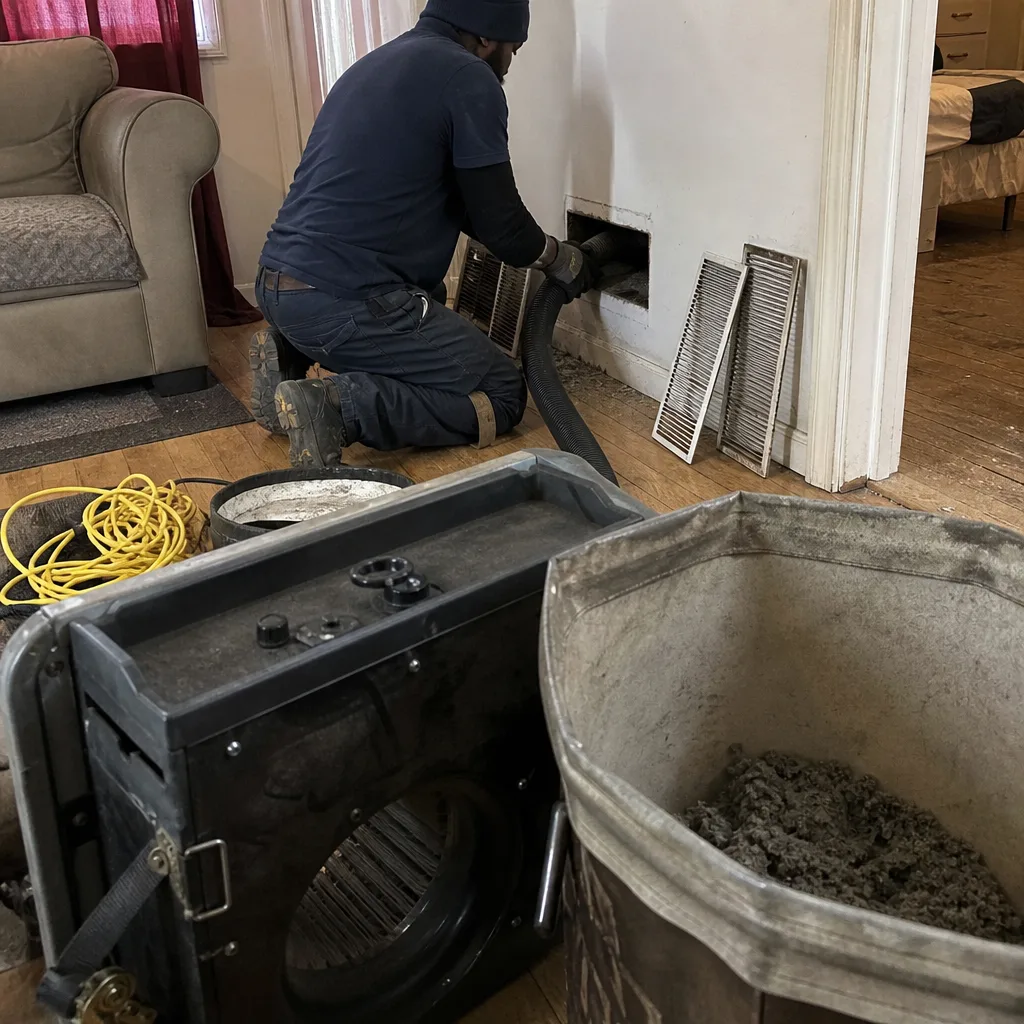 Before
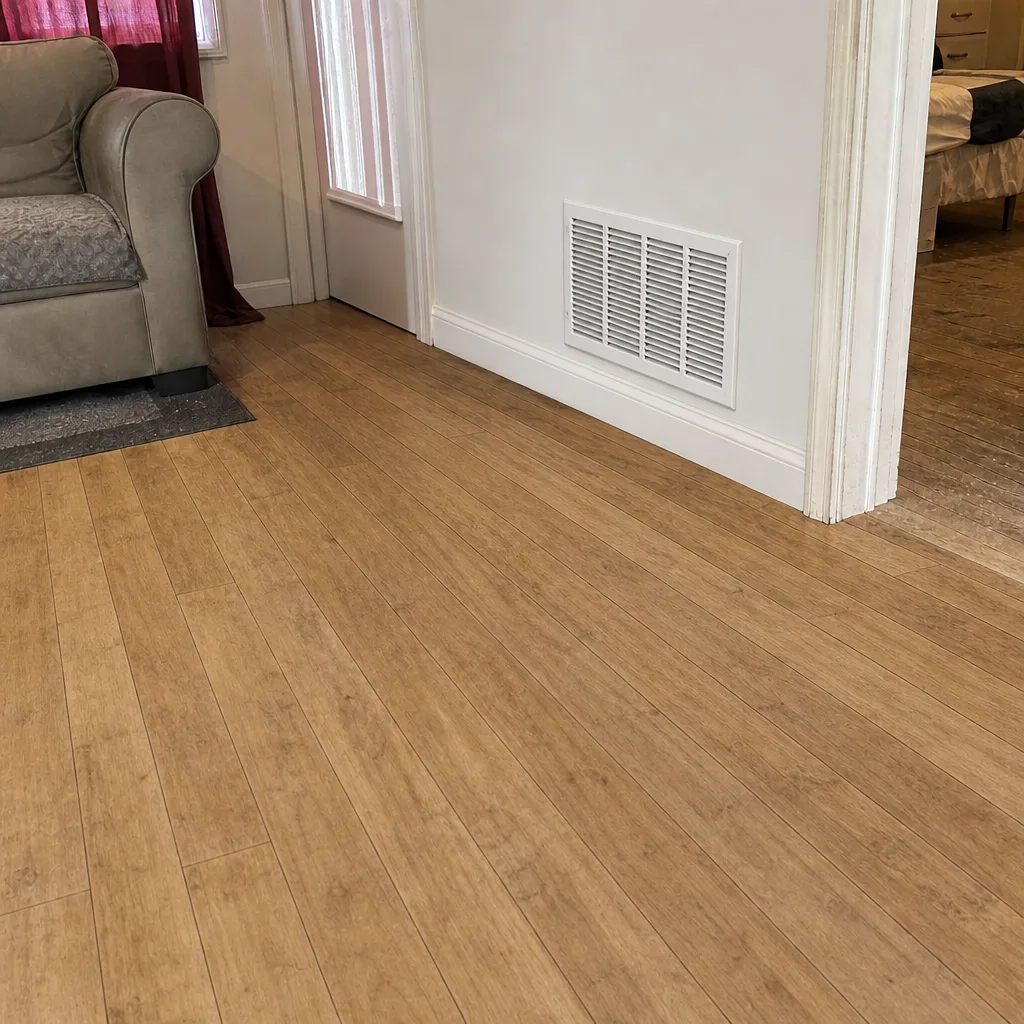 After
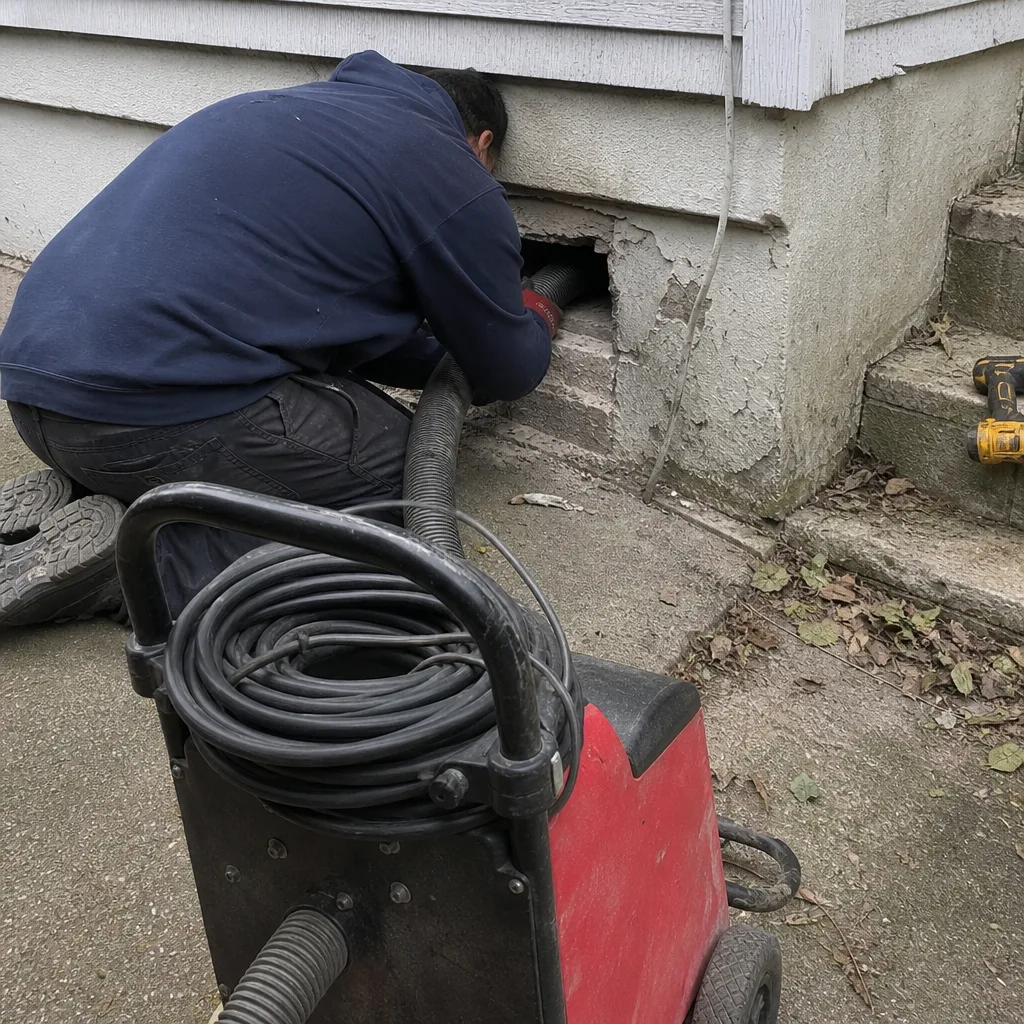 Before
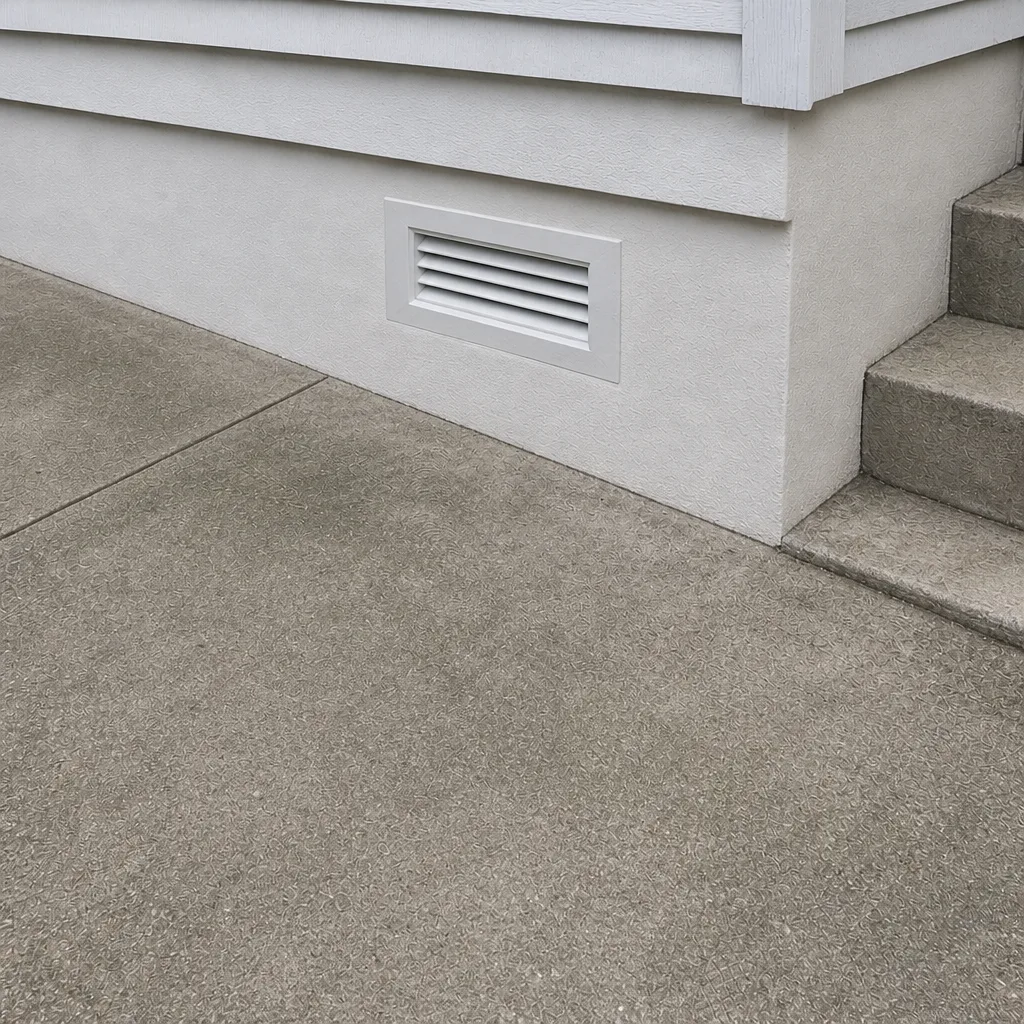 After
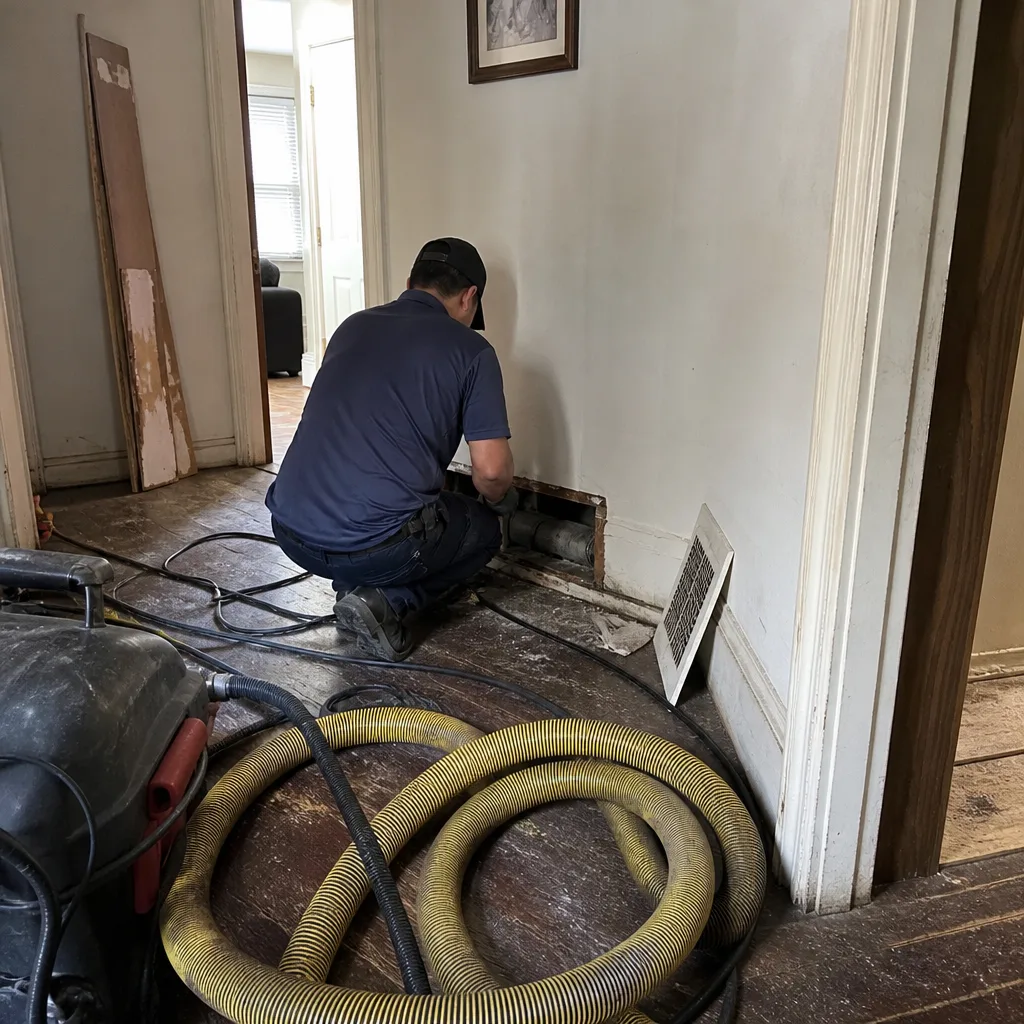 Before
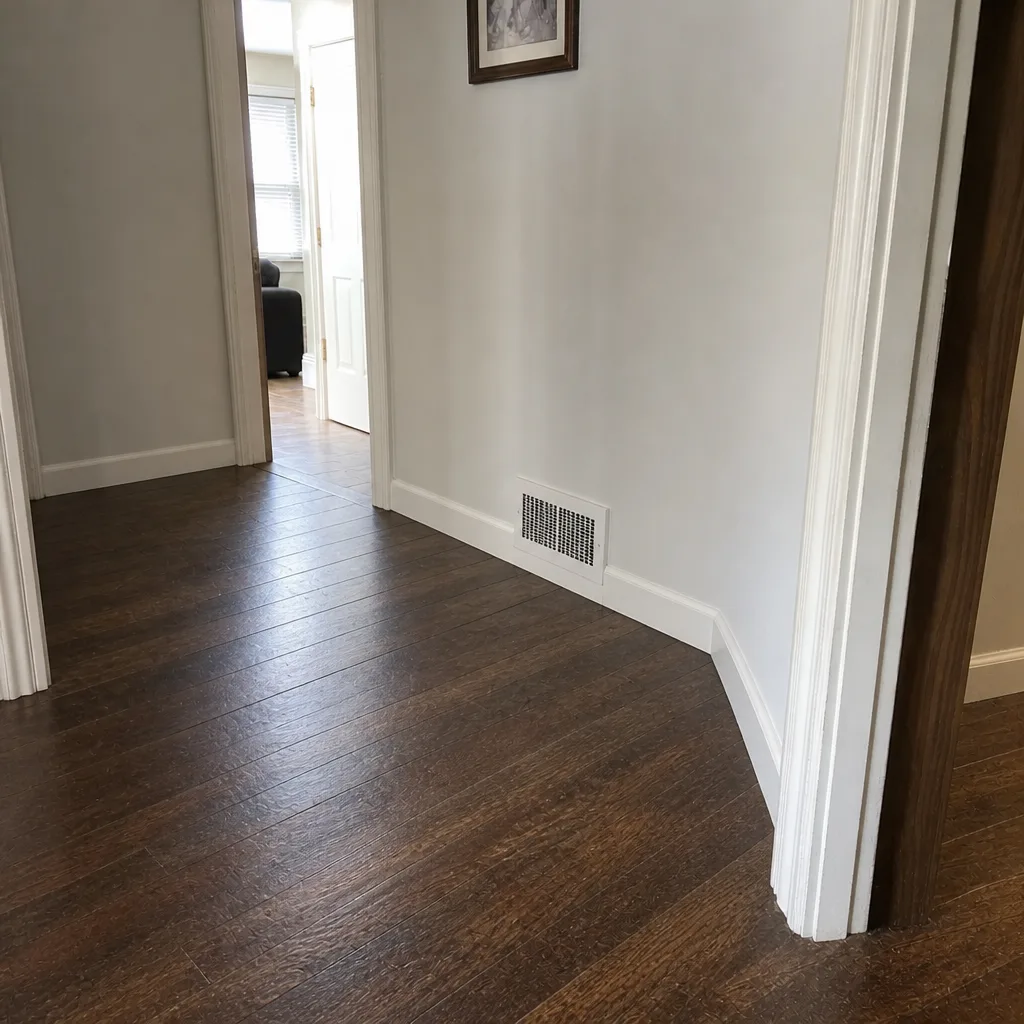 After
Common Mistakes to Avoid
- Chasing the smell with air fresheners or plug-ins. Masking a duct odor leaves the source in place, and in a stack-effect building, it spreads to other rooms the moment the system runs. Fix the source, not the symptom.
- Oversized or undersized filters. A filter that doesn’t match the slot bypasses air around its edges, which means you’re paying for filtration you aren’t getting. Measure the slot, not the old filter, when in doubt.
- Assuming a duct cleaning alone will solve a pressure problem. If your ducts are leaking at the joints in a Mott Haven walk-up, cleaning removes debris from inside a leaky system that will refill. Sealing is the step that makes the cleaning last.
- Ignoring the dryer vent because it “still works.” A slow dryer is a warning, not a quirk. In rowhouse conversions with long, kinked vent paths, lint buildup in one season is not unusual, and the risk category is different from dusty supply ducts.
- Signing off on a verbal “all good.” Ask for before-and-after pressure readings and photos of your own duct interior. Any contractor who can’t produce them hasn’t finished the job. This is the single most useful habit a homeowner can build.
- Running the system to “test” it after an electrical or gas smell. That’s how a small problem becomes a serious one. Shut it off and call.
- Skipping fixture-by-fixture documentation before work. The photos you take before any technician arrives are your baseline. Without them, “it was already like that” is unanswerable.
When to Call a Professional
Call a professional when a symptom has lasted more than a heating or cooling season, when it changed room to room after a renovation, when a room won’t heat or cool while the rest of the unit is fine, when you smell something musty or unfamiliar near a register, when the dryer is taking longer than it used to, or when you can see dust accumulation or staining at a register. Also call – and go straight to the gas utility first – for any gas or carbon monoxide smell. For everything short of a safety event, the diagnostic call is what turns symptoms into a plan. A free estimate in Mott Haven is the right first step. Call (855) 658-4004. We answer 24/7, and fast dispatch runs from 7am to 7pm, Sunday through Friday.
Frequently Asked Questions
The honest answer is: most air ducts don’t need cleaning on a fixed schedule. They need cleaning when there’s a specific reason – visible contamination at a register or boot, a musty smell traced to the duct, a recent renovation that introduced drywall dust, pest activity, or a camera inspection confirming buildup inside the runs. In Mott Haven’s stack-effect buildings, pressure testing and a camera inspection tell you whether the problem is contamination, sealing, or both. A cleaning quote without a diagnostic is a guess about a system the technician hasn’t looked inside. Call (855) 658-4004 for a free estimate, and ask what the inspection includes.
A single whistling register usually means a restriction or collapse on the branch feeding that register, not on the whole trunk. The duct is trying to move more air than its cross-section allows, and the whistle is the air forcing through. In a pre-war Mott Haven rowhouse conversion, the culprit is often a flex duct that was retrofitted into a tight wall cavity and has since kinked or crushed. Only a camera inspection can confirm what’s happening on that run, and only then can you decide whether it’s a repair or a replace. Call (855) 658-4004 for an exact quote – estimates are free.
No. A shop vac can pull dust off the face of a register and out of a short visible section, and that’s about it. It doesn’t have the negative-pressure containment to extract debris from a trunk line without redistributing it through the rest of the system, and it can’t reach past the first bend of a wall-buried run. Contractor-grade equipment – the kind that creates contained negative pressure and uses a rotary brush to dislodge debris from duct walls – is what makes a real cleaning possible. Consumer vacuums can actually make contamination worse in a leaky system by stirring it up without capturing it.
For most homes, every three to five years is a reasonable general guide, but the determining factor is your specific system and building, not a calendar. A sealed, well-maintained system in a newer unit can go longer. A leaky system in a Mott Haven walk-up running stack-effect infiltration can need work sooner, because contamination returns through unsealed joints. The right answer is to let a pressure test and camera inspection set the schedule, not a manufacturer’s recommendation or a contractor’s reminder card. If you’ve never had a diagnostic done, start there. Call (855) 658-4004 for a free estimate.
Low quotes are usually low because they skip a step. Common shortcuts: no camera inspection, no pressure testing before and after, per-vent pricing that only cleans the visible faces, no repair or sealing on the other side of the work, and no documentation of what was done. In a stack-effect building, that’s a cleaning that fails within a heating season. The systematic approach costs more on the front end because it includes inspection, sealing where it’s needed, and a record of the pressure change. The written estimate you get reflects the actual work. No per-vent pricing, one flat price per system agreed before work starts. Call (855) 658-4004 for a free estimate.
You should be given before-and-after static pressure readings at the same test points, photos or video of your duct interior taken before and after, and a written record of what was sealed, cleaned, and sanitized. If a contractor can’t produce any of that, “we cleaned it” is a claim, not a result. This is why we use equipment that produces measurable outputs rather than just visible ones, and why we walk the customer through what the numbers mean. A documented result you can show a future buyer or property manager is the standard the work should be held to. Call (855) 658-4004 to schedule an estimate, and ask what documentation is included.
The Bottom Line
Duct problems aren’t random. A whistle points to a restriction. A musty smell points to moisture or contamination local to a run. A puff of dust at a register points to a pressure or filtration failure. Uneven rooms point to a leak or disconnect. In Mott Haven’s walk-ups, all of it sits on top of stack-effect infiltration that pulls unfiltered air through every unsealed joint – which is why sealing is the step that makes cleaning last. Read the symptom, document it, insist on a camera and a pressure test, and verify the fix with before-and-after numbers. That sequence is what separates a real repair from a hopeful one. For a free diagnostic estimate, air duct cleaning in Mott Haven starts with a call. We answer 24/7, and fast dispatch runs from 7am to 7pm, Sunday through Friday.
If your path forward includes air duct cleaning, dryer vent cleaning, or HVAC cleaning, those services pair naturally with the diagnostic work in this guide. Most duct systems that need one of them benefit from the others being assessed at the same time – one contractor, full system, no hand-offs between specialists. The written estimate sets the final price, and the estimate itself is free. Call (855) 658-4004 and we’ll walk through what you’re hearing, seeing, and smelling, and match it to a diagnostic plan.
Written by the team at Air Duct Cleaning Mott Haven.