
Last updated November 22, 2026
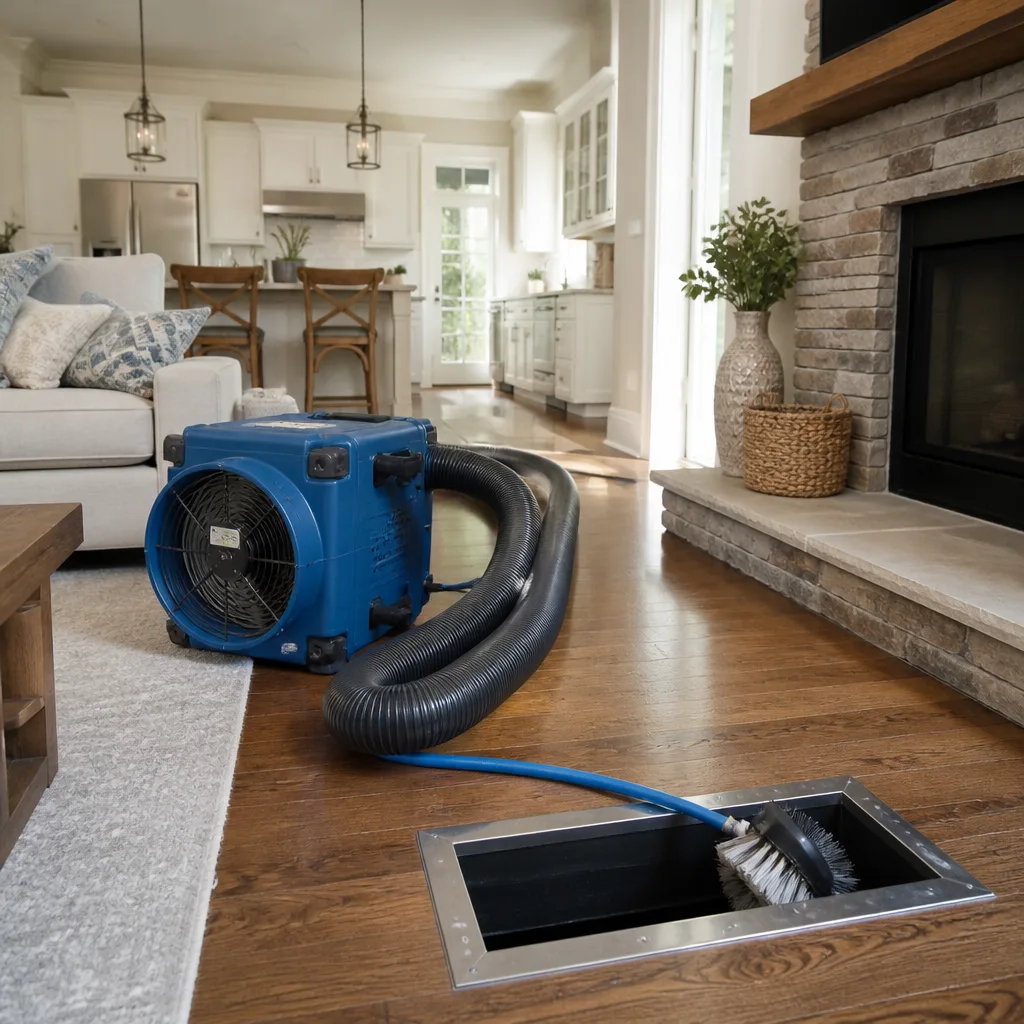 Whole-home duct cleaning
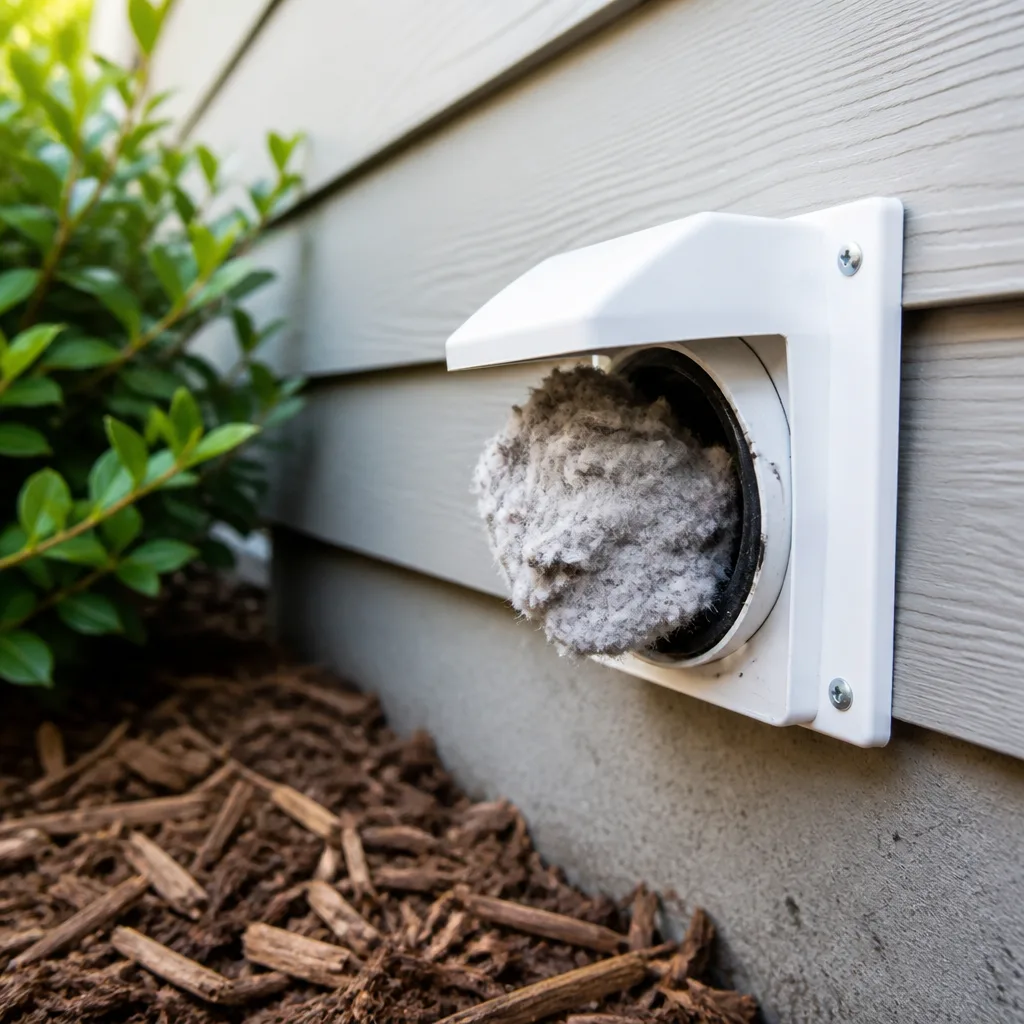 Dryer vent cleaning
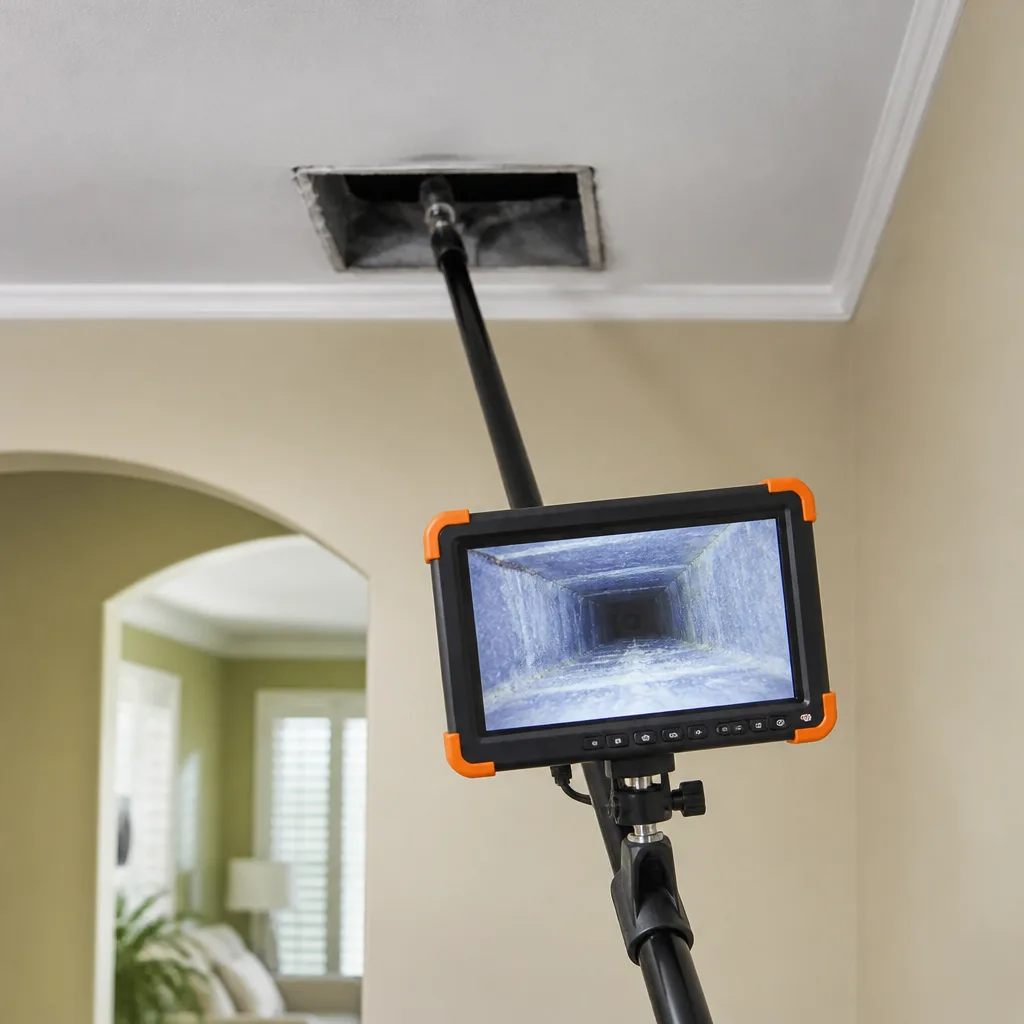 Camera inspection
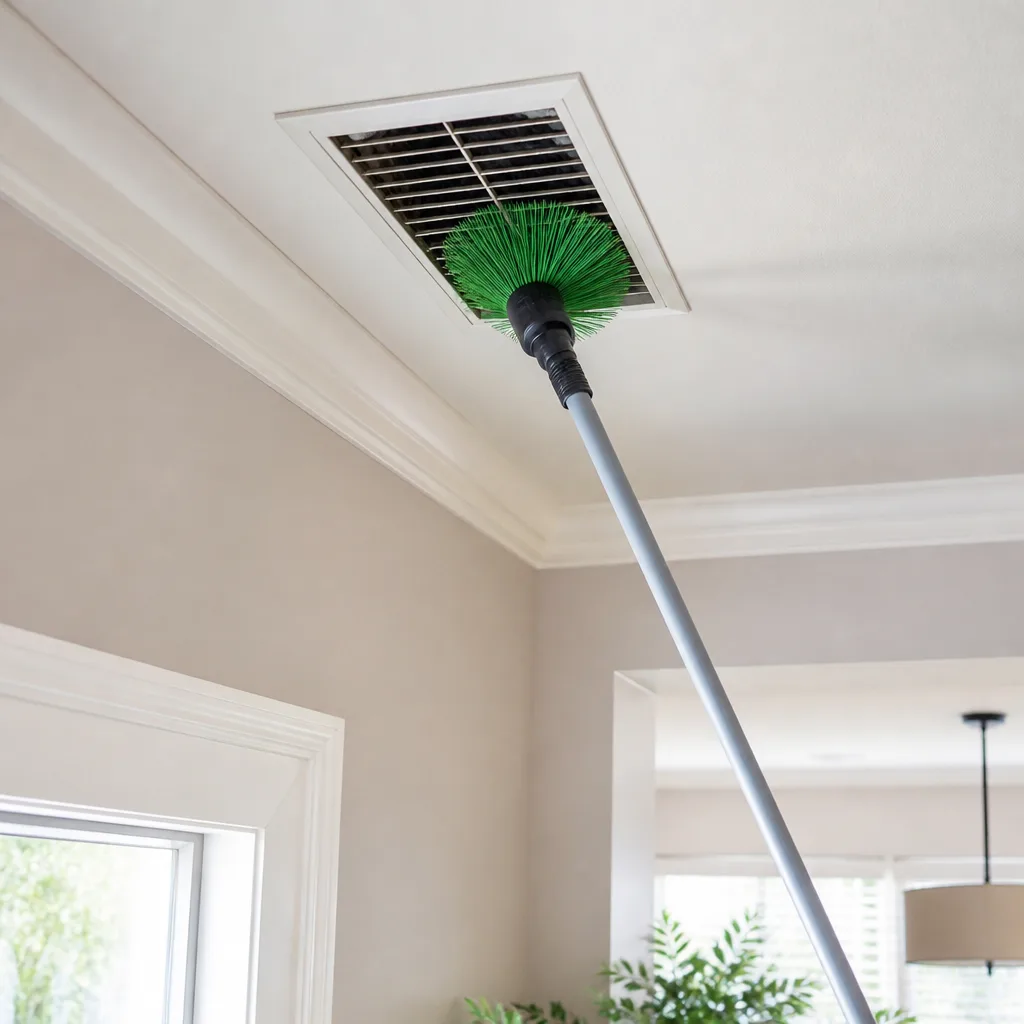 Sanitizing & deodorizing
Whole-system duct and dryer vent check with before-and-after photos - you see exactly what came out of your vents
That "$99 whole-house special" is a bait ad - the real number appears once they are in your hallway, or the "clean" is a shop-vac at the register. We photograph the inside of your ducts before and after instead.
Air Duct Cleaning Emergency Preparedness Guide for Mott Haven Homes
When water reaches the furnace, most people do the one thing that makes the damage worse: they switch the system on to “dry things out.” That single habit can push floodwater mist, mold spores, and whatever the water picked up off the basement floor through every supply register in the building. Duct emergencies aren’t won by reacting fastest. They’re won by acting in the right order, and the order isn’t obvious. This guide gives you a decision tree for the four emergencies that actually hit Mott Haven duct systems – water, fire, vermin, and renovation dust – plus how to document each one so an insurance adjuster has something to work with.
Quick Answer
A duct emergency is any event that contaminates the inside of your system faster than routine cleaning can address it – flood intrusion, fire smoke, animal activity, or heavy construction dust. The first 24 to 48 hours decide whether the ductwork can be cleaned and restored or has to be replaced. In every case the first move is the same: shut the system down and keep it off until a professional has assessed the interior. Clean, dry, and safe comes before comfort.
Styles & brands we work with
- Whole-home duct cleaning
- Dryer vent cleaning
- Camera inspection
- Sanitizing & deodorizing
Table of Contents
- Step One in Every Duct Emergency: Shut the System Down
- Post-Flood Protocol: What to Do Before Anyone Touches the Thermostat
- After a Fire or Smoke Event: Cleanable Versus Replacement
- Vermin Intrusion: Reading Active Versus Historic Activity
- Post-Renovation Dust: Why HEPA Extraction Isn’t Optional
- Why Mott Haven Buildings Are Set Up for Duct Emergencies
- Documenting a Duct Emergency for an Insurance Claim
- Common Mistakes to Avoid
- When to Call a Professional
Step One in Every Duct Emergency: Shut the System Down
Before any assessment, any phone call, or any shop-vac, kill the power to the air handler. This is the single instruction that applies to all four emergency types, and it’s the one homeowners skip most often. An HVAC system is a giant air mover. Whatever is sitting inside the ductwork or on the equipment gets distributed to every conditioned room within minutes of startup.
Here’s the sequence we walk people through before anything else:
- Turn the thermostat to OFF and set the fan switch from AUTO to OFF. AUTO with a call for heat or cool is not off.
- Cut power at the breaker that feeds the furnace or air handler. Label it if it isn’t labeled already.
- Close supply registers in affected rooms if the contamination source is localized – a flooded basement, a renovation in one apartment.
- Do not run the fan in “circulate” or “on” mode, even just to move air. That’s the mistake.
- Photograph the panel, the equipment, and the water or damage line before cleanup begins, because insurance wants the scene as found.
What happens if you skip this? In our experience, most of the costly flood-damage duct jobs we’re called to would have been simple cleanings if the system had stayed off. Once waterborne material has been pushed through the supply trunks and into rooms, the scope of the job triples. Keeping the system down is free and it protects everything downstream. When the power is off, you’ve bought yourself time – and the next step is deciding what kind of event you’re actually dealing with.
Post-Flood Protocol: What to Do Before Anyone Touches the Thermostat
Floodwater that reaches HVAC equipment is a contamination event, not a moisture event. Even clean-looking water carries silt, organic matter, and whatever it crossed on the way in. The interior of a duct system after water intrusion is a dark, humid environment with dust and fiberglass already inside it – close to ideal for microbial growth. That’s why the sequence is shutdown, documentation, moisture assessment, then professional inspection, in that order.
Here’s the ordered protocol:
- Shut down and document – system off, breaker off, photographs of the water line against any equipment.
- Measure moisture, don’t guess. A cheap pin-type moisture meter against the ductwork and the air handler cabinet tells you whether it’s surface wet or saturated insulation inside the panels. Ideally this happens before you open windows and start fans.
- Stop the water source and dry the space – but not with the HVAC fan.
- Call for inspection before anyone runs the system, even a week later. Duct board and internal insulation (the fiberglass lining inside older duct runs) soak up water and hold it. A system that feels dry on the outside can hold moisture inside for a long time.
- Decide clean or replace based on what the inspection finds inside the duct walls and the equipment cabinet, not based on how the outside looks.
Mott Haven’s building stock matters here. A large share of the neighborhood’s housing is in multifamily buildings with basement-level mechanical rooms and boiler or air-handler equipment at or below grade. During heavy summer rain, backed-up drains and street flooding can put water on the floor of those rooms quickly. In a shared building, the protocol gets a second layer: property management should be notified immediately, because one flooded mechanical room can affect every unit’s supply air.
Two things we check with contractor-grade equipment once we’re on site: the interior of the duct walls with a camera and rotary brush system, and the equipment cabinet for standing or absorbed water. Professional extraction and the correct controls on the system during the drying phase matter more than any consumer-grade fan arrangement. This is also one of the cases where air duct cleaning overlaps with a full HVAC assessment – the two can’t be handled separately after a real water intrusion.
After a Fire or Smoke Event: Cleanable Versus Replacement
Smoke travels through a duct system the same way air does, which means a fire in one part of a building can coat the inside of ducts serving rooms nowhere near the flames. The question isn’t whether smoke got in – it’s how much, and whether the deposits are surface film or baked-on soot that has bonded to the duct walls.
The rough split we work with:
- Light smoke exposure: visible film on registers and the interior of supply trunks, smoke odor in the air, no char inside the duct. This is typically cleanable with professional rotary-brush cleaning, negative-pressure containment, and odor treatment.
- Heavy char contamination: charred duct board, melted insulation, soot that’s absorbed into porous lining, or any structural damage. At that point cleaning can’t restore the duct – partial or full replacement is the honest answer, and we’ll tell you so.
- Between the two: moderate soot deposition with odor but no structural loss. Cleaning with professional equipment and sanitizing is usually feasible, and the decision comes down to an interior inspection.
Smoke residue isn’t just soot – combustion byproducts include acidic and oily compounds that can also coat the blower wheel and the evaporator coil. That’s why a smoke event always involves HVAC cleaning, not ductwork alone. Cleaning the ducts while leaving a sooty blower and coil in place does nothing useful; the first time the system runs, it moves that residue straight through your freshly cleaned ducts.
Do not run the system on fan mode to “clear the smell.” Do not spray household deodorizers into registers. Both push particulate deeper into the system and make the eventual cleaning harder. Keep the system off, keep windows open once the fire department clears the building, and get an inspection scheduled. If the building has smoke detectors or environmental monitoring, photograph their readings before they reset.
Vermin Intrusion: Reading Active Versus Historic Activity
Rodents, birds, and insects find their way into duct systems through gaps at the roof penetration, disconnected sections, and crawl-space openings. A single gap can support years of activity nobody notices, because the interior of a duct run isn’t visible from a register. The first question is not “how do we clean it” – it’s “is the activity still happening.”
How to tell the difference:
- Active signs: fresh droppings or nesting material that appear between checks, recent gnaw marks, scratching or scuttling inside the ductwork, insects at registers. Active infestation must be stopped before cleaning begins.
- Historic signs: droppings that are dry and dessicated, nesting material that isn’t being added to, gnaw marks with no fresh material, and no new noise or sighting since a known date. Historic activity still requires decontamination, but the pest issue isn’t ongoing.
This is the one emergency where the order of operations is fixed: pest control comes first, and duct work comes after. Here’s why: cleaning a system with an active infestation just gives the animals a clean place to return. We don’t begin work until the pest issue is controlled and the entry points are closed. Inspect and close entry gaps, then bring in the cleaning. After pest control has finished, the correct response is professional cleaning with extraction followed by a sanitizing treatment. The dryer vent line deserves the same inspection – nesting birds and rodents use that line too, and a blocked vent is a fire risk on top of an air-quality problem.
Porous duct board that has absorbed animal waste can’t be sanitized back to a clean state – replacement is the only honest recommendation. Metal ductwork with historic activity can usually be cleaned and treated. We use Guardsman-line protective treatments as part of the sanitizing step and check compatibility with your existing Honeywell or Aprilaire filters and controls so the treatment isn’t fighting the filtration you already run. We recommend a professional inspection after confirmed activity rather than attempting to read the signs yourself – the inside of a duct is not a safe place to investigate.
Post-Renovation Dust: Why HEPA Extraction Isn’t Optional
Renovation dust isn’t ordinary dust. It’s a specific set of materials that behave poorly in a duct system: drywall joint compound (very fine, and it dries into a hard film on duct walls), fiberglass insulation fragments (irritant, and easily airborne), and demolition particulate (everything from masonry dust to bits of old caulk and wood). Standard shop-vac extraction won’t remove these from duct walls, and it won’t contain them while trying.
What actually removes them is HEPA-grade extraction with negative pressure – the system is kept under negative pressure so dust is pulled out, not pushed into rooms – plus rotary brushing to break the film off the duct walls. Standard consumer equipment pushes the finest fraction of this dust back into the air it’s supposed to be cleaning. That fine fraction is the part people breathe deepest.
The common mistake after a renovation in Mott Haven is the contractor’s “we’ll just change the filter” line. A filter catches what reaches it; it doesn’t remove dust that has already settled on the duct walls and inside the plenum. The order that actually works:
- Seal off the system during the renovation – registers covered, returns ducted to HEPA filtration or taped and the system not run for anything but comfort air.
- Vacuum the rooms to HEPA standard once demolition is finished and before you turn the system back on.
- Have the ductwork professionally cleaned after substantial renovations – kitchens, bathrooms, and any project involving drywall demolition are the ones that matter.
- Change the filter last, not first, and use the correct thickness and MERV rating for your air handler.
Multi-unit buildings face this constantly. An apartment renovation on another floor can push dust through a shared return system to units nowhere near the work. If you’re a landlord, schedule a system inspection once the drywall is done, not after the tenant complains. We can’t claim to be working from a specific zip code – we’re not – but we handle Mott Haven renovation work regularly and know the pattern.
Why Mott Haven Buildings Are Set Up for Duct Emergencies
Mott Haven isn’t a one-building-type neighborhood. Much of the housing is multifamily: pre-war walkups, converted rowhouses, and newer mid-rise infill along the main corridors. Several of the structures date to the early 1900s. That building age matters for duct emergencies in ways that aren’t obvious at the curb.
A few of the recurring patterns:
- Aged duct systems and later retrofits. Many older buildings were built without a central forced-air system and had ductwork added in pieces during renovations. That means sections with older duct board next to new metal, plus joints that were never sealed. Disconnected sections are common and let contamination travel.
- Mechanical equipment at or below grade. Basement-level air handlers and boiler rooms in low-lying blocks are the first thing water reaches during heavy rain or a burst pipe. That’s where the flood protocol above matters most.
- Shared return systems in multifamily buildings. Dust, fire smoke, and pest activity from one unit can travel through a shared return into neighboring units. Turning the system off in a shared-building emergency usually requires the building manager, which is why a plan should exist before an event.
- Older filters and filter cabinets that don’t seal. A filter that doesn’t seat properly lets unfiltered air bypass it entirely, which is half of why post-renovation and smoke events hit this housing stock harder.
We’re an air quality contractor that works in Mott Haven – the building stock above is what shapes every job. Whatever the emergency, we arrive with equipment that belongs in a professional assessment: the Rotobrush rotary-brush system, Nikro negative-pressure extraction, and Abatement Technologies tools for fine-particulate and microbial concerns. Consumer-grade equipment doesn’t have the reach or the containment for a real emergency.
Documenting a Duct Emergency for an Insurance Claim
Insurance covers provable damage, and duct systems are the part of a building most people can’t photograph because it’s hidden. If you don’t document the interior, the claim becomes an argument. What you want is a set of records that tells a chronological story: the event, the state of the system, and what a professional determined had to be done.
The documentation package homeowners and property managers should assemble:
- Photographs of the event as found – the water line against the air handler, the fire damage, the pest entry point, the renovation scope. Timestamped and in sequence.
- System off documentation – proof the system was shut down before further contamination, which supports your duty to mitigate further damage.
- Moisture readings – the pro’s readings or a moisture meter record. A reading shown against the reading from an unaffected room is a strong contrast.
- Air quality measurements – particle counts or comparable readings taken in an affected room and a clean room before cleaning, and again after. The “after” readings are your proof the work was done and effective.
- An interior inspection report – photos or video from inside the ducts, with the equipment names noted so a skeptical adjuster can tell this was done with professional machinery.
- A written scope of work – the specific services recommended, the reason for each, and a line-item cost. Insurers want a scope, not an invoice.
- Post-remediation report – what was actually cleaned or replaced, dated and signed by the team that did the work.
Keep the documentation in one folder. Insurance companies are used to “the vents were cleaned” receipts – they’re less used to a report that shows interior pre- and post-cleaning measurements. If you’re a landlord in Mott Haven with a claim, get these records before the remediation starts. The report matters more than a photograph of a shiny register.
Common Mistakes to Avoid
- Running the system to “dry things out.” This is the roof of every mistake. Whatever is in the duct or on the equipment goes into the room air on the first cycle. Shut it off and leave it off until a professional says otherwise.
- Calling for cleaning before pest control. In a vermin situation, cleaning before the activity is stopped gives the animals a fresh start and leaves the entry points open. Pest control first, always.
- Changing the filter right after a renovation. A new filter catches nothing that has already settled on the duct walls. It also doesn’t help when the filter cabinet doesn’t seal – the bypass gets wider with a clean filter, not narrower.
- Paying for per-vent cleaning after a flood. A genuine water event needs a full system assessment, not spot treatment. Air Duct Cleaning Mott Haven quotes one flat price per system, not a per-vent figure – because a flat price is the number that can’t grow once work starts.
- Accepting “we can clean it” for a porous duct board that absorbed water or animal waste. The honest answer for saturated duct board is replacement. Anyone who says otherwise has not looked at the inside of it.
- No documentation before cleanup. Once the fans are on and the shop vac runs, the evidence that would have supported a claim is gone. Photograph first, clean second.
- Ignoring the dryer vent because it’s not “ductwork.” A dryer vent is a duct run, and it’s the one with lint and a fire risk. A flood, a pest event, or a renovation that missed the dryer vent is an incomplete response.
When to Call a Professional
Some situations are clearly professional jobs: any water reaching HVAC equipment, any fire or smoke event, confirmed pest activity inside ductwork, and substantial renovation involving drywall demolition. These are the four emergencies in this guide, and none of them respond well to consumer equipment.
There’s also the “maybe” column, and that’s where a professional assessment is worth the call even if the answer is that nothing needs cleaning:
- Moisture or a musty smell after any water event, even a small one.
- Visible dust blowing from registers after a renovation.
- New scratching, animal smell, or insects at a register.
- An insurance claim where the adjuster wants documentation of the interior.
Estimates are free, the price is set per job by a written estimate before any work starts, and we can take before-and-after photos of the interior so you can see what was actually done. Air Duct Cleaning Mott Haven offers free estimates in Mott Haven – call (855) 658-4004. We answer 24/7. Fast dispatch from 7am to 7pm, Sunday through Friday; we’re closed on Saturday.
See the difference
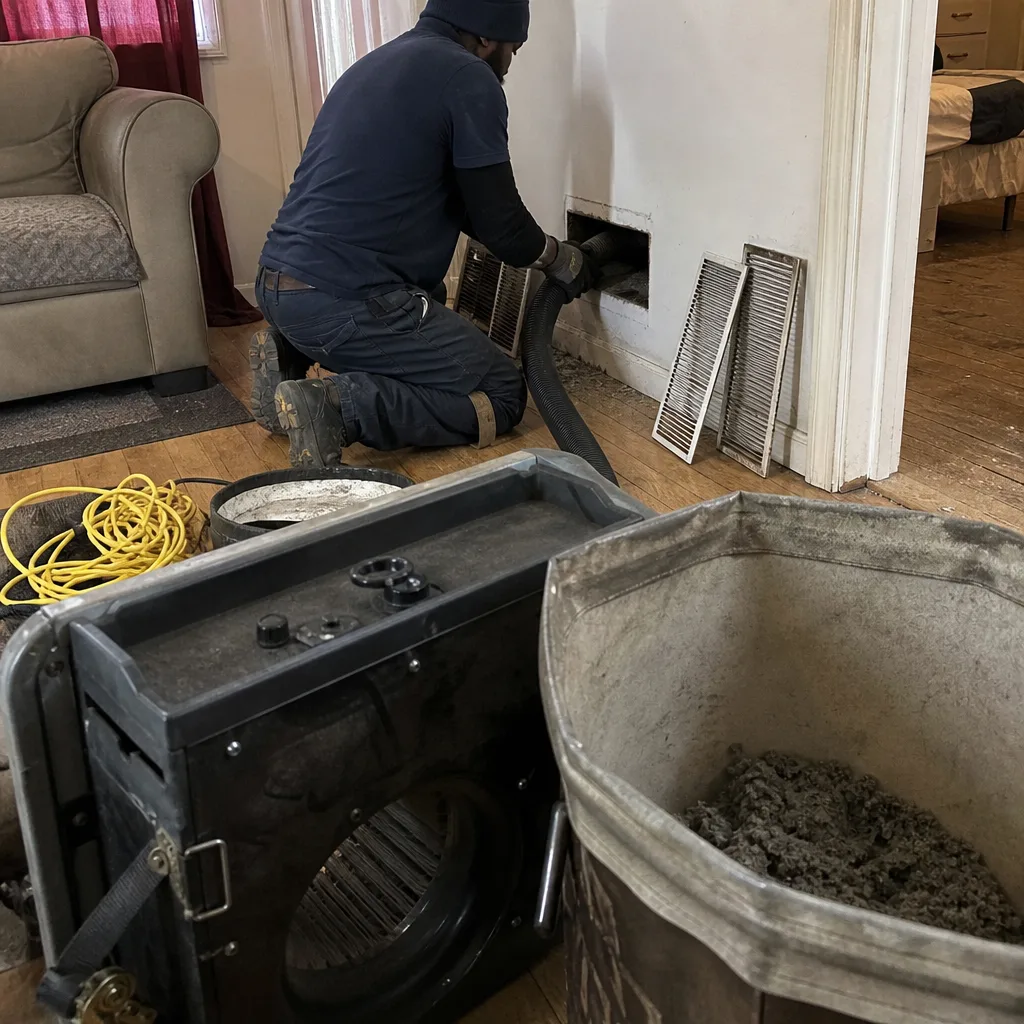 Before
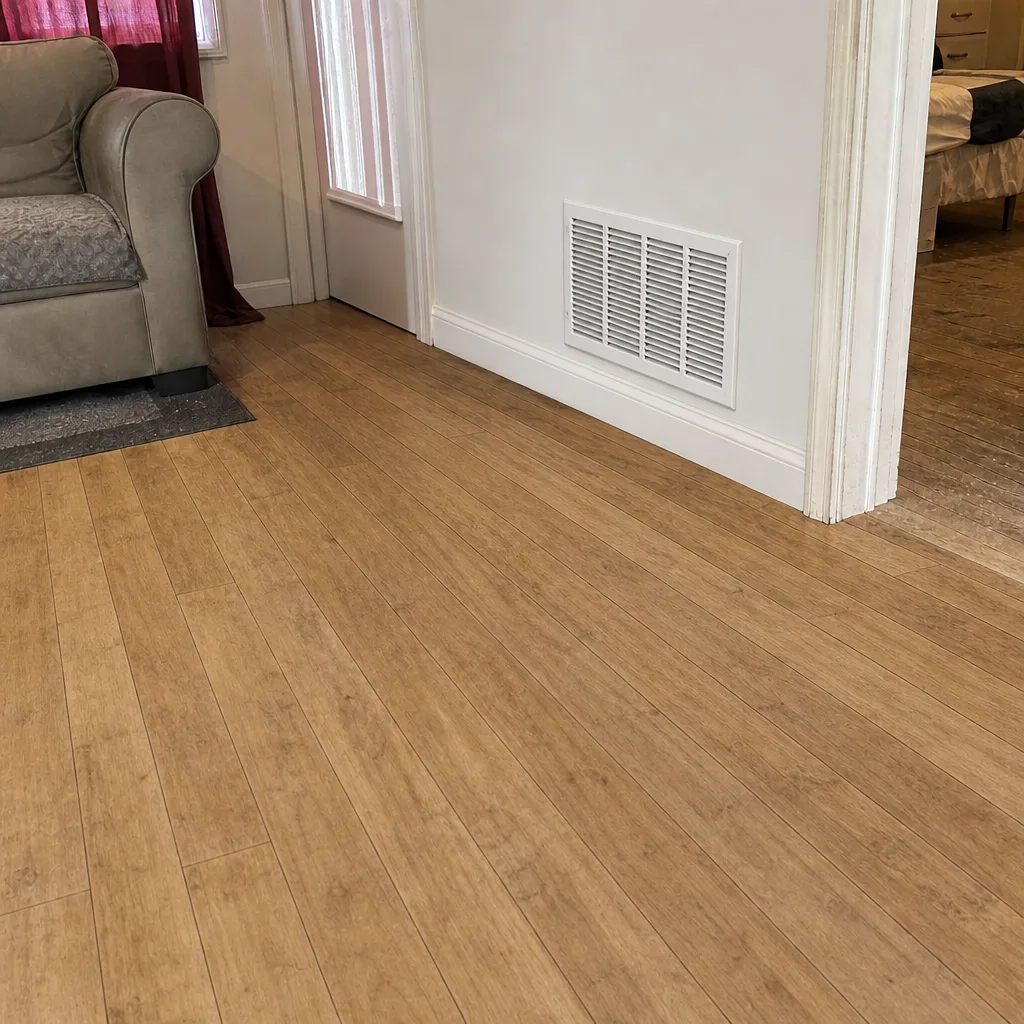 After
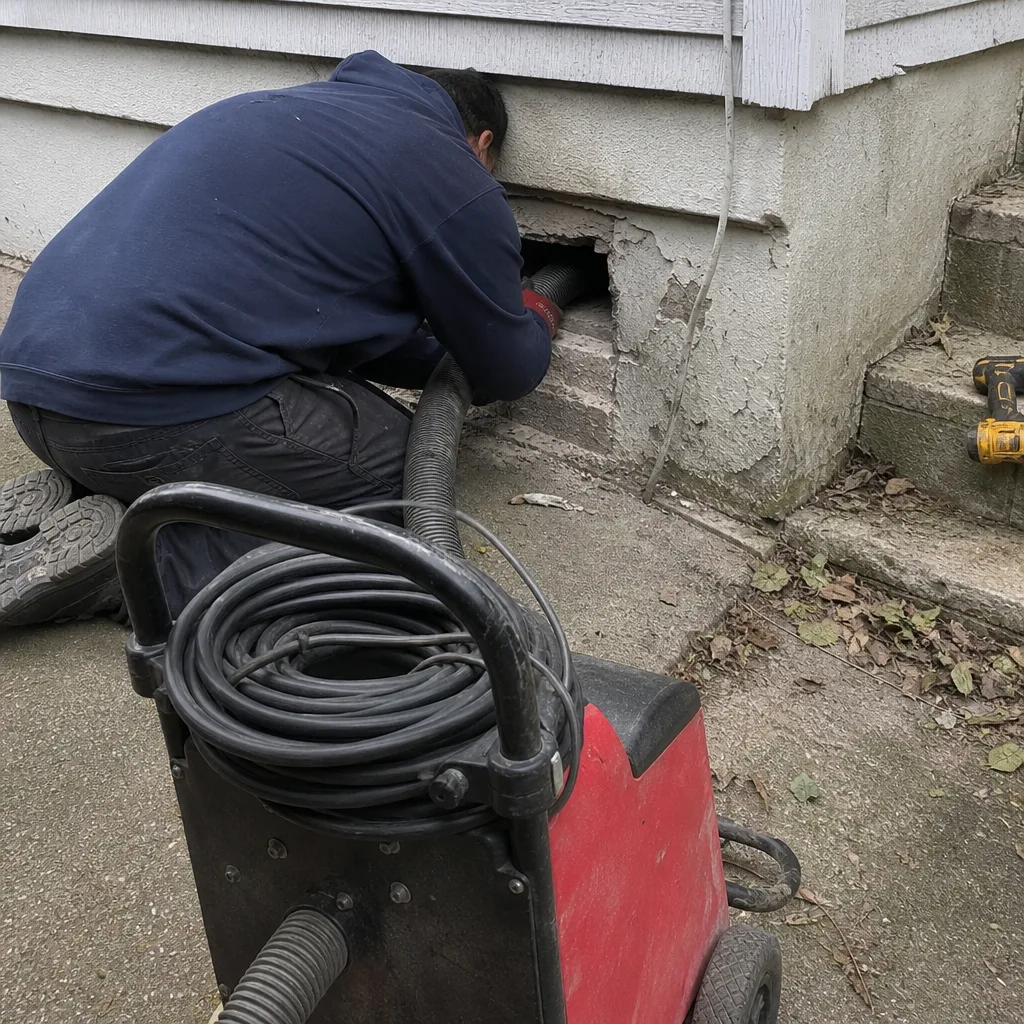 Before
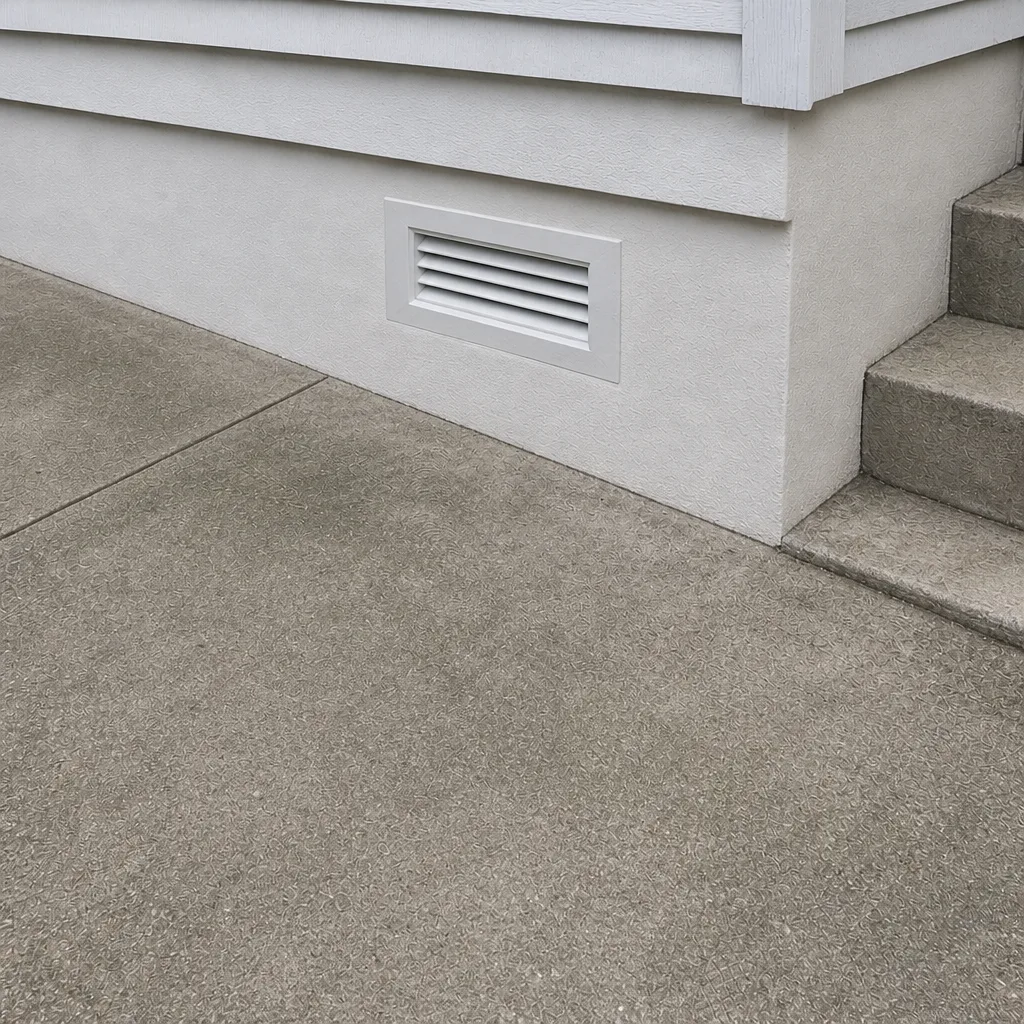 After
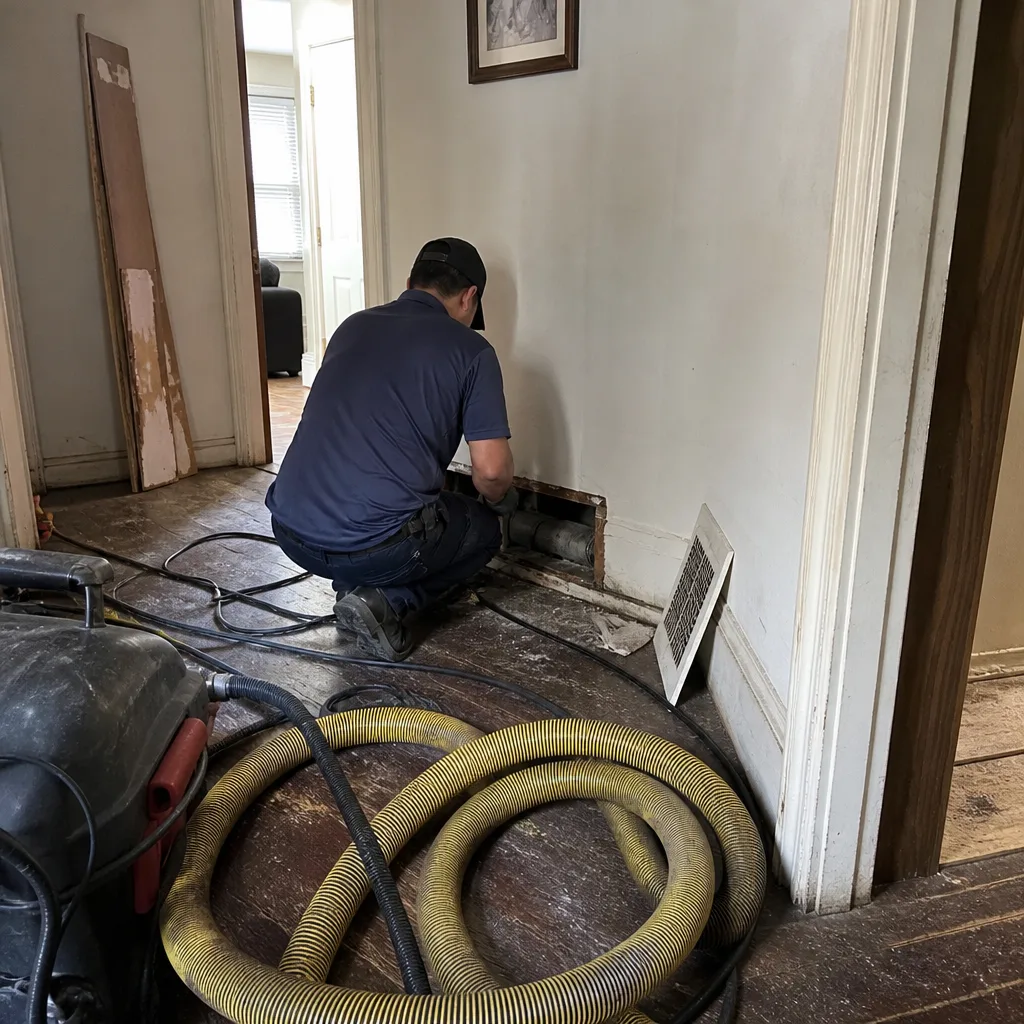 Before
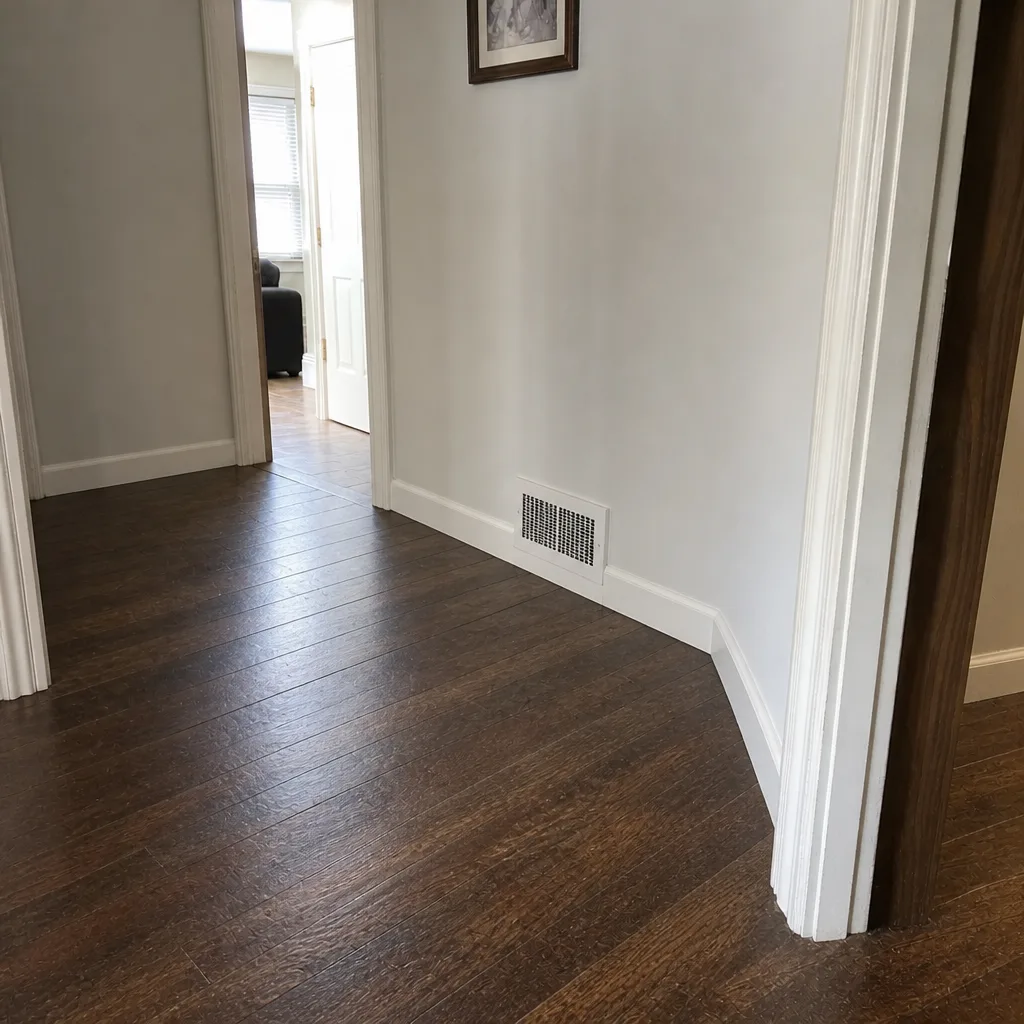 After
Frequently Asked Questions
A typical post-flood duct cleaning runs $600 to $1,800 for a full system, with post-fire and post-renovation HEPA extraction usually higher due to the additional assessment and sanitizing steps. The exact range depends on the size of the system, the number of affected runs, and whether any duct board must be replaced. We quote one flat price per system from a written estimate before work starts – not a per-vent figure – because the number shouldn’t grow when the technician gets on site. Call (855) 658-4004 for an exact quote – estimates are free.
No. Keep the system off at the breaker until a professional has inspected the air handler and the duct interior. Running it distributes whatever the water carried through every room, and the moisture inside the ductwork becomes the growth environment. Shut it down, photograph the scene, then call. Call (855) 658-4004 – we’ll assess before anything else.
Light to moderate smoke you can usually clean; heavy char damage you usually cannot. If the soot is a surface film on metal ductwork, professional rotary-brush cleaning with containment will restore it. If the duct board is charred, melted, or has absorbed soot into its lining, replacement is the honest recommendation.
Routine cleaning every three to five years is a reasonable interval, and the honest answer is that many systems don’t need it at all if the filters are changed correctly and nobody has had a water, smoke, pest, or renovation event. Emergency situations reset the clock: the system should be cleaned after the event regardless of when the last cleaning was. Call (855) 658-4004 to talk through your building’s history – estimates are free.
Ask for interior photos or video from before and after, and for particle readings from inside the system. After a documented emergency we provide both, because “it was cleaned” with no record is what every bait-and-switch operator says. If a contractor won’t show you interior photos, that’s your answer.
Usually it’s the equipment and the scope. A quote that doesn’t include HEPA extraction, negative pressure, or sanitizing after a contaminated event is essentially a shop-vac run that won’t remove fine particulate or surface growth – and can redistribute it. We use contractor-grade equipment (Rotobrush, Nikro, and Abatement Technologies) because the fine fraction of post-fire and post-flood dust is the part that matters. Call (855) 658-4004 for a real scope and a written price.
The Bottom Line
Duct emergencies are won in the first 24 to 48 hours, and the winning move is always the same: shut the system down, document the scene, and let a professional assess the interior before anything runs. Every scenario in this guide follows from that – floodwater, fire smoke, vermin, and renovation dust all get worse with a running fan. If the interior is cleanable, we clean it with professional equipment and prove it with post-cleaning readings. If it’s not, we say so. That’s the whole decision tree, and the one flat price per system is what keeps the job honest. Estimates are free. Call (855) 658-4004 and we’ll walk your building through the assessment.
Written by the team at Air Duct Cleaning Mott Haven.