
Last updated November 22, 2026
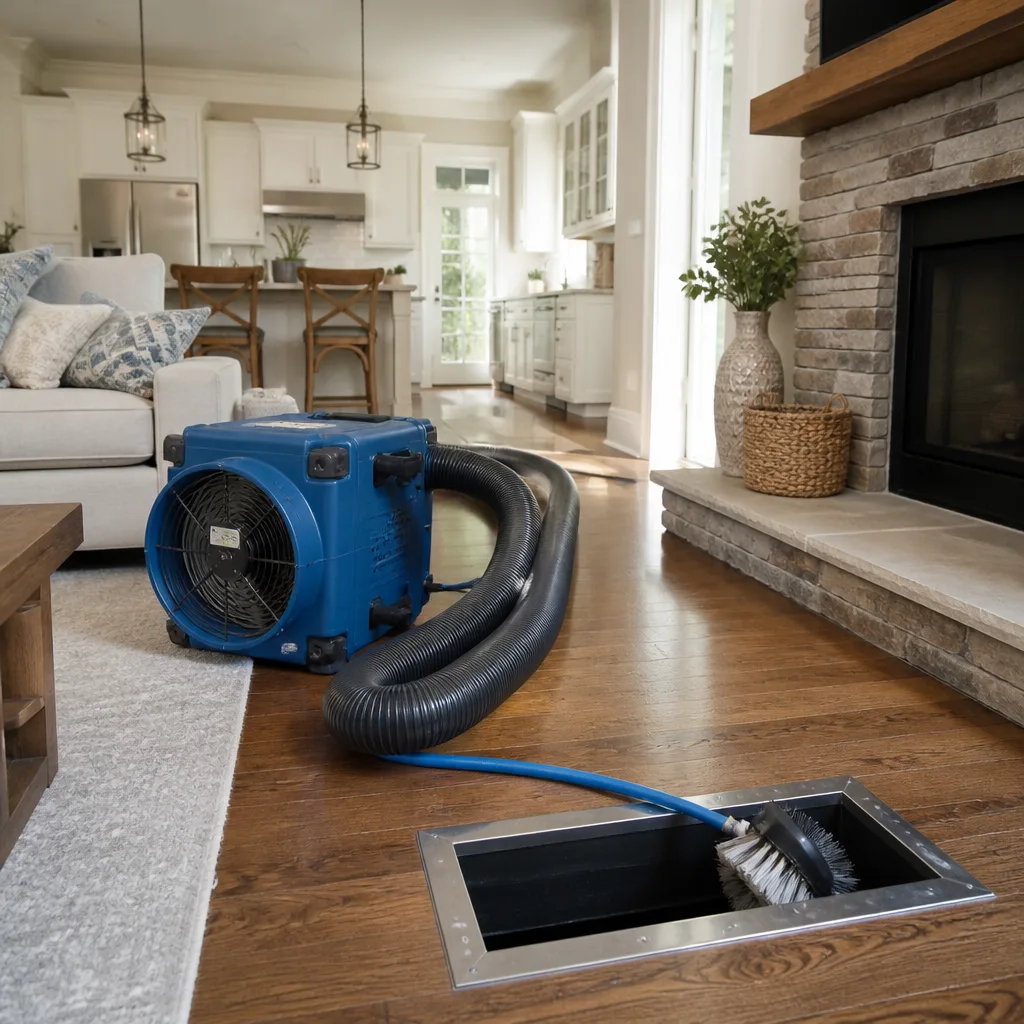 Whole-home duct cleaning
 Dryer vent cleaning
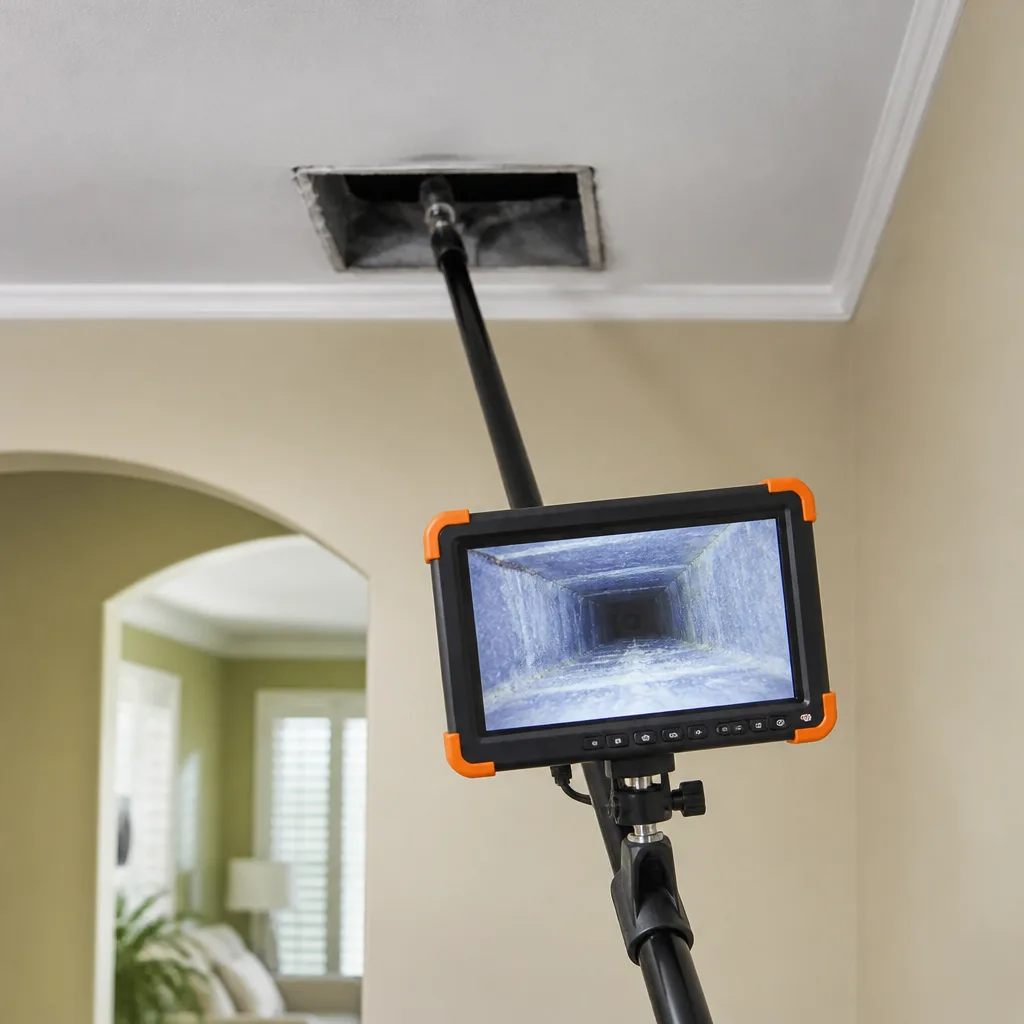 Camera inspection
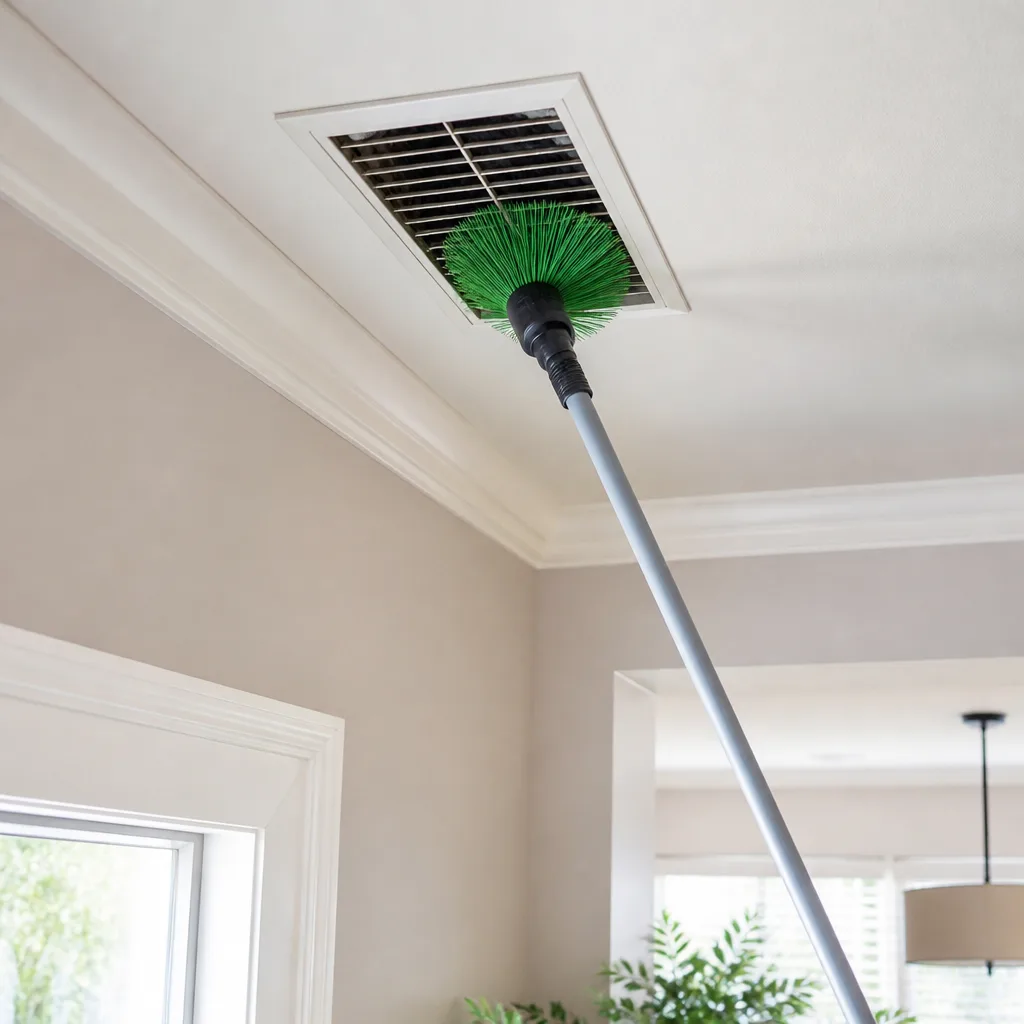 Sanitizing & deodorizing
Whole-system duct and dryer vent check with before-and-after photos - you see exactly what came out of your vents
That "$99 whole-house special" is a bait ad - the real number appears once they are in your hallway, or the "clean" is a shop-vac at the register. We photograph the inside of your ducts before and after instead.
How to Hire an Air Duct Cleaning Contractor in Mott Haven: A Step-by-Step Guide
Most people assume the hardest part of air duct cleaning is the cleaning itself. It isn’t. The hard part is figuring out, before anyone walks through your door, whether the crew you hired is actually equipped to clean a duct system or just equipped to sell you one. New York does not require air duct cleaners to hold a state license, which means the screening falls on you. A low headline price and a friendly phone manner tell you nothing about the machine in the truck. This guide walks you through the questions, the paperwork, and the checkpoints that separate a full-system contractor from a bait-and-switch operation, with context specific to hiring in Mott Haven.
Quick Answer
To hire an air duct cleaning contractor in Mott Haven, verify four things before you book: the equipment they’ll bring (a truck-mounted or portable negative air machine plus rotary agitation tools), whether they follow NADCA’s ACR standard, a written scope of work that covers the whole system from returns to registers, and a post-service report with before-and-after documentation. Skip any contractor who quotes over the phone without a site visit or can’t name their equipment.
Styles & brands we work with
- Whole-home duct cleaning
- Dryer vent cleaning
- Camera inspection
- Sanitizing & deodorizing
Table of Contents
- Why Vetting Matters More Than the Quote
- The Five Equipment Questions to Ask Before Booking
- What NADCA Membership and the ACR Standard Actually Require
- How to Structure a Written Scope of Work
- Red Flags Specific to Mott Haven’s Rental Market
- What a Legitimate Post-Service Report Should Include
- A Step-by-Step Hire Walkthrough
- When to Call a Professional
Why Vetting Matters More Than the Quote
Air duct cleaning sits in an unusual regulatory gap. Plumbers, electricians, and general contractors in New York all work under some form of state or local licensing. Duct cleaners generally do not. That means there is no state register to check, no license number to look up, and no licensing board to complain to if the work goes wrong. The only quality control is the one you build yourself, before the job.
That gap is exactly what low-price operators rely on. When someone offers a very low starting number, the business model usually depends on the technician arriving with undersized equipment and then selling add-on services once inside. The starting number isn’t a lie, exactly, but it isn’t the job either. The job is whatever the technician decides you need after the door closes.
At the same time, the “how often should I clean my ducts?” question has no universal answer. Some homes need it, and plenty of homes don’t need it nearly as often as they’re told. What every home benefits from is an honest assessment. That’s the whole reason to vet the contractor first: you want someone who will tell you the system is fine when the system is fine, and who will do a real job when a real job is needed.
In a dense, mixed-age housing stock like Mott Haven’s, this matters even more. The same block can hold a row of early-twentieth-century walk-ups, mid-century apartment buildings, and townhouses added recently. Duct systems in those buildings vary wildly in condition, access, and layout. A contractor who works a lot in Mott Haven has seen that range and knows how to plan a job around a tight closet-mounted air handler or a return chase in an old wall.
The Five Equipment Questions to Ask Before Booking
Equipment is the fastest way to separate a capable crew from an underequipped one. You don’t need to be an HVAC professional to ask these questions; you just need to know what the answers should sound like. A professional-grade crew relies on three families of tools: negative-pressure extraction, agitation, and filtration (plus, in homes with contamination, full remediation equipment).
1. What negative-pressure machine will you use, and what is its CFM rating?
CFM means cubic feet per minute. It’s the measure of how much air the machine pulls through the system, and it’s the single biggest indicator of whether the cleaning will actually extract debris or just move it around. Consumer-grade shop vacs run in the low hundreds of CFM at best. Truck-mounted or contractor-grade portables run far higher. Ask the number; a crew that uses professional equipment will know it without hesitation.
2. Is the machine equipped with HEPA filtration?
HEPA filtration traps fine particulates instead of exhausting them back into the living space. In a Mott Haven apartment where a contractor is working in a closet or through a small opening, HEPA is what keeps dust from drifting into the next room. A crew that uses HEPA in the extraction chain and knows why will describe that clearly.
3. What agitation tools will you use on the duct walls?
Dust and debris cling to the walls. Suction alone doesn’t dislodge it. Professional crews use rotary brushes and compressed-air whips to break the material loose so the extraction machine can pull it out. Rotary-brush systems like Rotobrush are the standard the HVAC industry specifies for this job. If the answer is vague (“we just vacuum it”), the cleaning won’t actually get the walls clean.
4. Do you use negative-pressure containment for the whole system, or do you vacuum register by register?
Proper cleaning puts the whole system under negative pressure so the dust has one direction to travel – out, not into your rooms. Register-by-register vacuuming with a handheld machine is a spot treatment, not a cleaning. Ask them to describe containment. A proper crew has a plan.
5. What happens if you find microbial growth or contamination?
If the answer is an upsell on the spot, that’s a red flag. A capable contractor has remediation tools in the mix – Abatement Technologies equipment, for example, is built for fine-particulate and contaminant work beyond ordinary vacuuming – and will tell you up front what a remediation job involves and what triggers one. You should hear a process, not a price tag.
What NADCA Membership and the ACR Standard Actually Require
The National Air Duct Cleaners Association (NADCA) is the trade body that writes the standards most reputable cleaners work to. Its best-known standard is the ACR standard – Assessment, Cleaning, and Restoration – which lays out the sequence a professional job should follow: assess the system, clean it thoroughly, and restore anything found damaged during the process. This is the standard to ask about by name.
ACR matters because it defines what “cleaned” means. It requires a genuine assessment before cleaning (an inspection, not a sales visit), source removal rather than sealing contaminants in place, and post-cleaning verification. It also addresses other components: while the ducts are open, the coils, the air handler, and the drain pan should all be inspected, because they’re part of the same system. That’s why a good HVAC cleaning belongs in the same scope as the ducts; cleaning one and leaving the other is a partial job.
How to verify compliance before the job:
- Ask if the contractor is a NADCA member. Membership is verifiable; the trade body publishes its member list.
- Ask whether they follow the ACR standard. The answer should be an unhesitating yes, followed by what that means in practice.
- Ask for their assessment process. It should involve an actual look at the system – the registers, the returns, the air handler – not just a phone quote.
- Ask how they verify cleaning afterward. The answer should involve visual inspection and documentation, not just a promise.
- Ask them to put the ACR reference in the written scope. If it’s in the contract, it’s a commitment.
Non-members can still be legitimate, so membership alone isn’t a pass. But a crew that follows ACR, whether or not they’ve joined the association, will answer these questions confidently and without flinching. If you’re working through how to hire air duct cleaning contractor in Mott Haven, this is the section to bring to the phone call. For a deeper look at what a full cleaning involves for a Mott Haven home, see our guide to air duct cleaning.
How to Structure a Written Scope of Work
A written scope of work is your protection. Without one, “air duct cleaning” can mean anything from a five-minute pass with a shop vac to a full-system service. Ask for the scope before you book, read it carefully, and make sure it names every part of the system the job will touch.
A complete scope should cover, at minimum, the following:
- All supply registers and runs – the ducts that push conditioned air into rooms. Ask how many runs are included in the quote; a house with 10 runs and a quote based on 4 is a quote for a partial cleaning.
- All return registers and return chases – the path air takes back to the air handler. These collect more debris than supply ducts in many homes because they pull from living spaces at floor level.
- The air handler compartment – the box that contains the blower and the filter. Dust accumulates on the blower wheel and the interior surfaces, and cleaning the ducts without cleaning the handler leaves contaminants right at the source.
- Coil inspection – the evaporator coil is where condensation forms during cooling season, and it’s a common place for microbial growth to take hold if drainage is poor. The scope should include at least inspecting the coil, and a plan if it needs cleaning.
- Sealing of accessible gaps – any disconnected joints, torn flex duct, or gaps the technician finds should be noted and repaired or quoted separately. This is where the Air Duct Cleaning Mott Haven team’s repair and sealing capability comes in, since a system that leaks doesn’t hold the negative pressure the cleaning relies on.
- Dryer vent cleaning – separate from the HVAC ducts but part of the same household system, and a genuine fire-safety concern. It’s worth asking about together; dryer vent cleaning is a safety service in its own right, and the lint that builds up in a dryer vent is the same kind of material that coats duct walls.
A scope that only mentions “accessible registers” is a scope for a partial job. Ask them to spell out what’s included, what’s excluded, and what would trigger a change order. Any contractor who resists putting the scope in writing before a site visit is telling you something about how the job would go.
Red Flags Specific to Mott Haven’s Rental Market
Mott Haven has a large rental population, and duct cleaning gets sold in that market through landlords and property managers as much as through owner-occupants. That shifts the dynamics. A landlord is often buying on behalf of tenants and can’t easily inspect the work; a tenant may be handed a cleaning that was done for a different reason than they assume. Here’s what to watch for.
- Quotes by phone without a site visit. A legitimate contractor wants to see the system – the number of runs, the condition, the access – before quoting. A phone quote is a sales pitch, not an assessment.
- No post-cleaning documentation. Ask up front what you’ll receive after the cleaning: before-and-after photos of the registers and ducts, a written summary of areas serviced, and the equipment used. If the answer is vague, pass.
- Can’t name the equipment. Any professional crew knows what their negative-pressure machine is, its CFM rating, and whether it’s HEPA-filtered. If the answer is “the standard equipment,” that’s not an answer.
- Pressure to bundle services on the spot. A contractor who arrives with a sales quota rather than a scope will spend the visit selling you things you didn’t ask for. If the price quoted isn’t the price agreed, it isn’t a quote; it’s a starting point.
- No follow-up channel. If there’s contamination, disconnected ductwork, or a coil that needs attention, you need a contractor reachable after the job. That’s why one that also handles repair and sealing – so a disconnected flex run found during cleaning can be repaired as part of the same visit – is worth more than a cleaning-only crew.
- Temperature-blind answers. In a building with a boiler or a mini-split, “duct cleaning” means something different from a forced-air forced-air system. A contractor who doesn’t ask what type of system you have isn’t planning the job correctly.
What a Legitimate Post-Service Report Should Include
The report is where a competent contractor proves the work. It should read like a scan result, not like a receipt. Here’s what to ask for, and what each piece proves.
- Before-and-after photos of the registers, and of the ducts where the technician could see them during cleaning. A good report uses photos taken inside the system, not stock images. If the crew uses a camera on a flexible pole to look inside a run, the photo is objective evidence of what was there before and what’s there now.
- A list of areas serviced – every register, every return, the air handler, and any coil inspection performed. Match this against your written scope; anything missing is a conversation to have.
- The equipment used – the negative-pressure machine, its CFM, the filtration (HEPA or not), and the agitation tools. This is your record for the next time you hire, and it tells you whether they did the job they described.
- Findings that require follow-up – disconnected duct sections, torn flex, gaps at boots, corrosion, or a coil that shows sign of microbial growth. A good report lists these clearly and recommends the next step, whether that’s a further HVAC cleaning, duct repair and sealing, or a remediation scope.
- Any safety concerns flagged – a dryer vent with heavy lint buildup, a disconnected flue, or a return chase open into a crawl space. This is where a full-service contractor adds real value beyond the cleaning itself.
If the contractor finishes and hands you nothing but an invoice, you have no record. Ask what the report will contain before you book. That one question filters out most of the crews you don’t want in your building.
A Step-by-Step Hire Walkthrough
Here is the whole process, condensed into a sequence you can work through on the phone and via email before anyone schedules a visit.
Step 1: Confirm the system type and any specific concerns
Know what you have. Forced-air forced-air system with central heating and cooling, or a boiler with radiators (in which case “duct cleaning” may not apply, but the range hood and dryer vent still might). Note any symptoms: recent renovation dust, visible dust at the registers, poor airflow, or a musty smell when the system runs. These guide the assessment and the scope.
Step 2: Ask the equipment and standard questions
Run through the five equipment questions from earlier – negative-pressure machine and CFM, HEPA filtration, agitation tools, containment approach, and contamination handling – and the NADCA/ACR questions. Take notes. This call also tells you how the company treats potential customers, which is usually how they treat paying ones.
Step 3: Request a written scope and a site-visit-based estimate
Ask for the scope in writing, with a site visit before the quote. Any quote given without seeing the system is a placeholder. The written estimate should specify areas included, equipment, and any items that would be billed as follow-up. Ask whether it’s one flat price for the system, or priced per register; a per-register structure usually tells you the job will be scoped to the minimum.
Step 4: Confirm the post-service report
Ask what documentation comes with the job. You want before-and-after photos, a list of areas serviced, equipment used, and findings. Get the answer in writing as part of the scope.
Step 5: Book, prepare, and inspect at handoff
On the day of the job, the technician should be able to walk you through what they’ll do, how long it takes, and where they’ll set up. Ask for a walkthrough when the job is complete. Match the walkthrough against your scope, and check the report before signing anything.
This sequence is short, and it takes one call to get through most of it. It’s also the most reliable filter against being sold a bait-and-switch cleaning. If you want to see how a full-system job is described in practice, our Mott Haven air duct cleaning page lays out the process.
Common Mistakes to Avoid
- Booking on price alone. A low starting price in a city where duct cleaning isn’t licensed usually means an undersized machine and an upsell later. Price should be one of five factors you weigh, not the deciding one.
- Assuming the cleaning covers the whole system. If the quote doesn’t name the returns, the air handler, and coil inspection, it likely covers only the accessible registers. Ask what’s included; count the number of runs in the quote against the runs in your home.
- Not asking for before-and-after documentation. Without photos, you have no way of knowing what the cleaning accomplished. Ask up front; the answer tells you a lot.
- Booking a cleaning when the real problem is a leak or a disconnected duct. In older Mott Haven buildings, disconnected runs and gaps in return chases are common. Cleaning a leaky system is wasted work until it’s sealed. Ask whether the contractor can handle repair and sealing in the same visit, or whether you’ll be handed off to someone else.
- Signing a scope that only mentions the ducts. The air handler, coil, and filter are part of the same system. If they aren’t in the scope, say so.
- Skipping the dryer vent. The dryer vent is a fire-safety system, not an air quality one, and lint buildup gets missed when it’s treated as an optional add-on. It’s worth asking about at the same time.
- Not checking whether the technician works with your thermostat and filtration setup. If you run a Honeywell or Aprilaire system, ask whether they’re familiar with it. Compatibility with your existing controls and filters means the work fits around your system rather than forcing changes.
See the difference
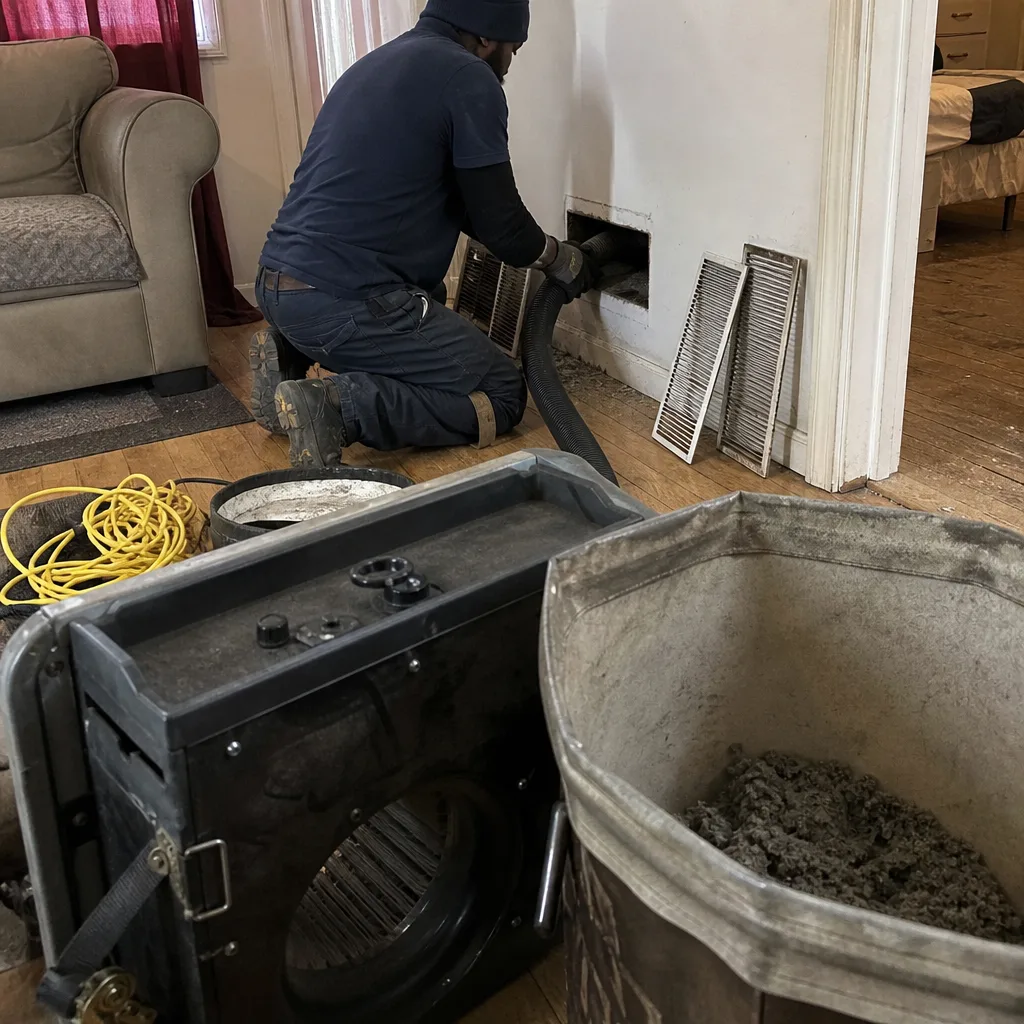 Before
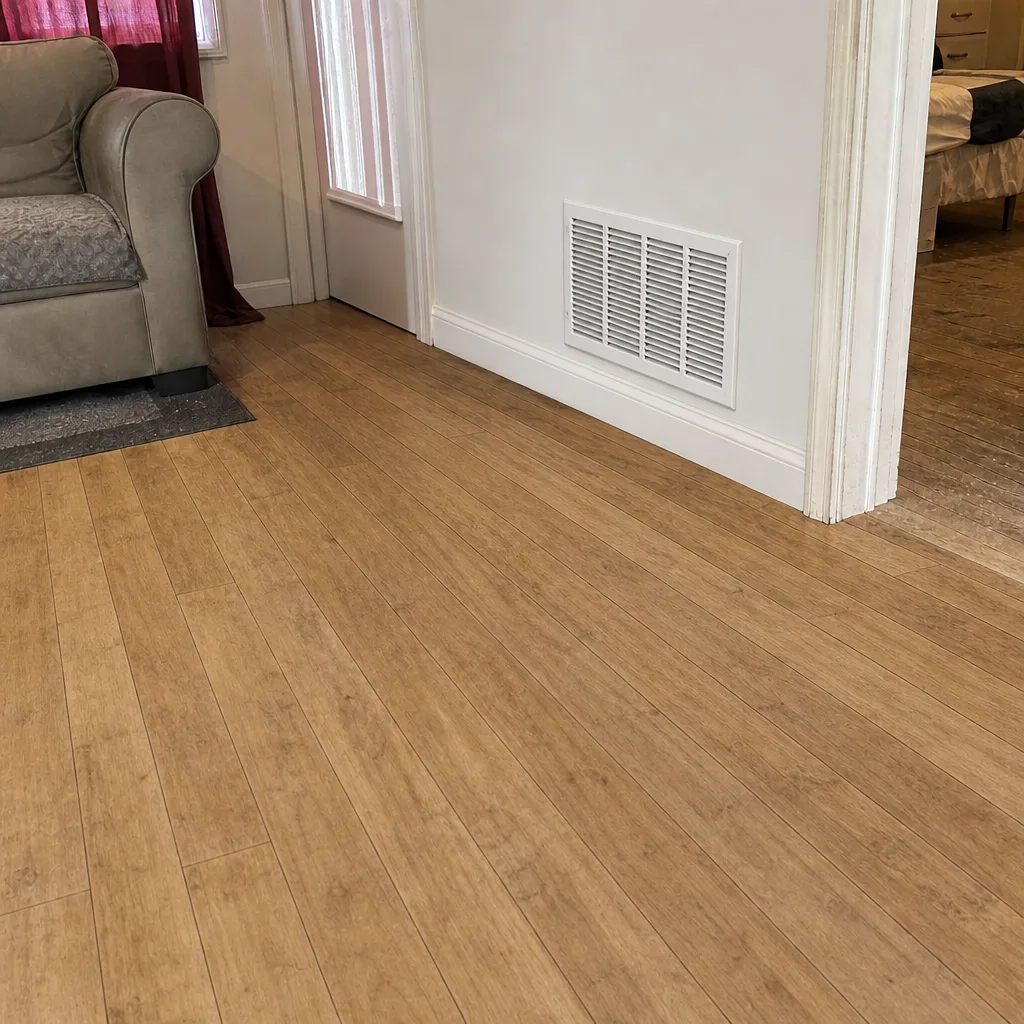 After
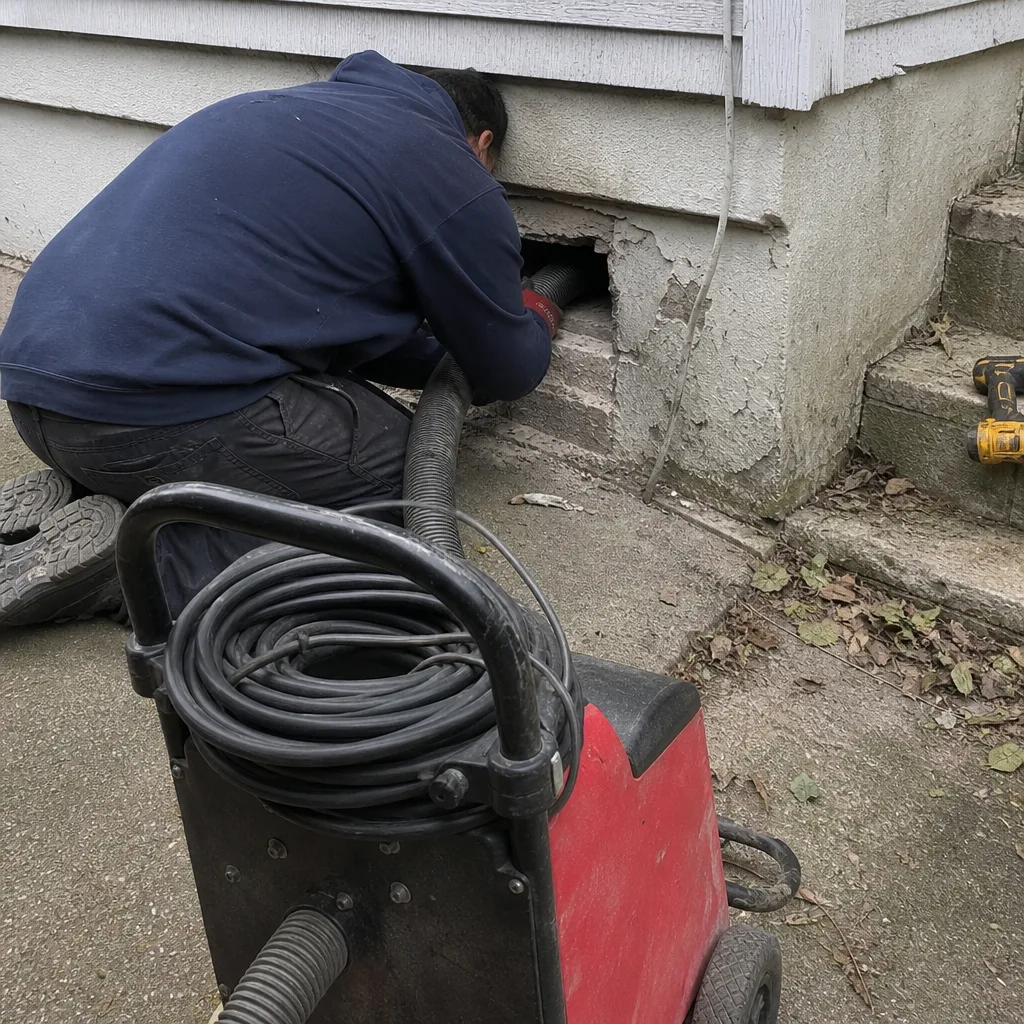 Before
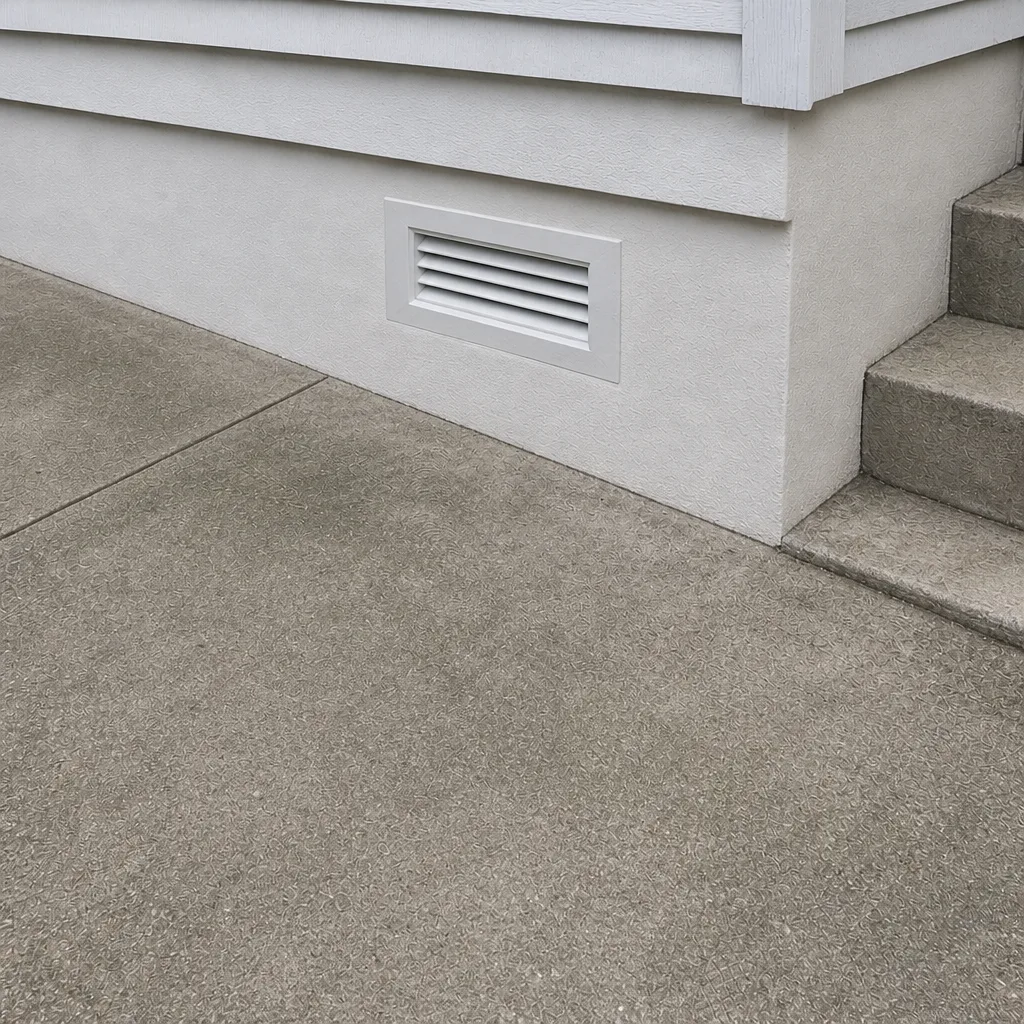 After
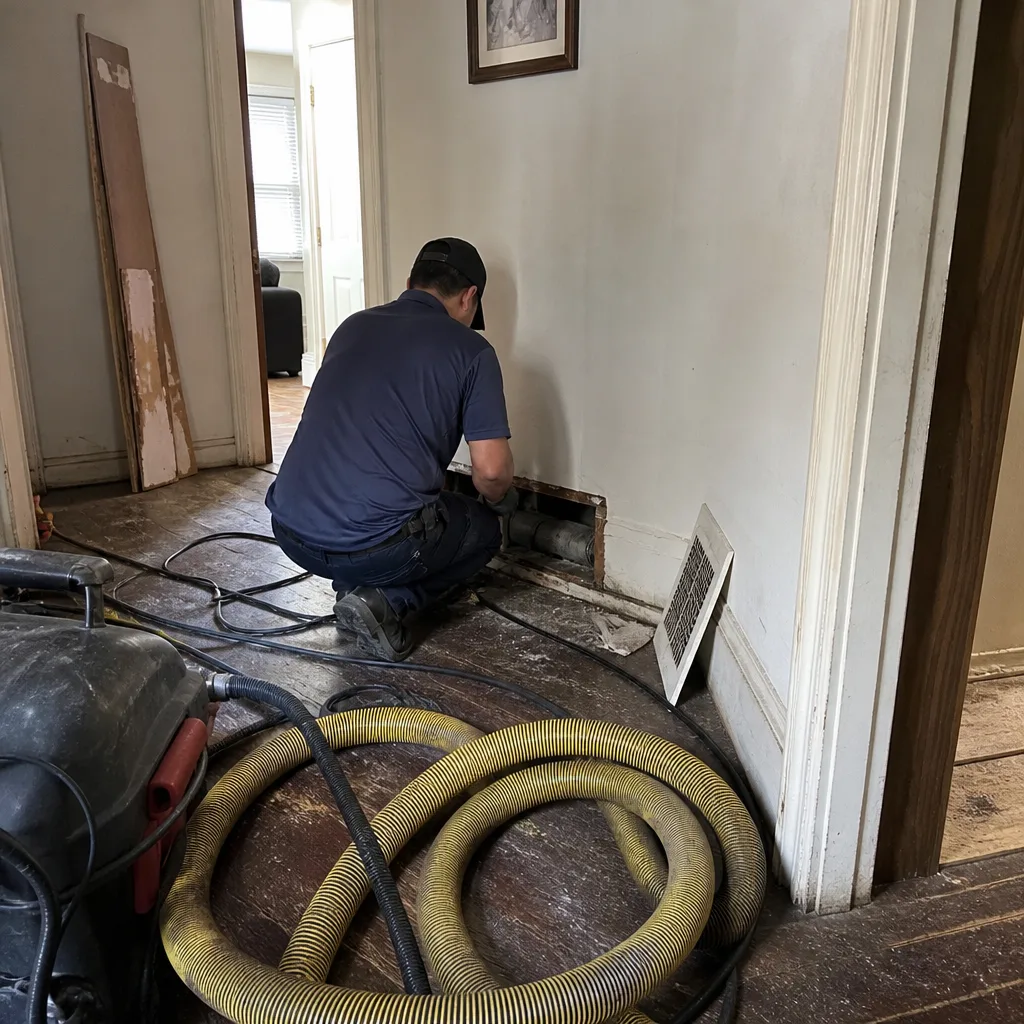 Before
 After
When to Call a Professional
Not every duct system needs cleaning, but some situations call for a professional on speed dial, and a few are safety issues. Call a professional when you’re ready to address the system, and also when you notice visible dust patterns at the registers right after a renovation; when airflow to a room has noticeably dropped and the filter isn’t the cause; when there’s a musty smell that appears only when the system runs; when a tenant or resident reports symptoms that seem tied to the air; when the dryer takes two cycles to dry a load; when a return chase is open to an unconditioned space; or when a contractor finds disconnected duct sections during a service call. In each of these, the right move is an assessment, not another filter change.
Air Duct Cleaning Mott Haven offers free estimates in Mott Haven. Call (855) 658-4004 to book one. We answer 24/7. Fast dispatch from 7am to 7pm. Our technicians have up to 13 years of experience and use contractor-grade Rotobrush rotary-brush cleaning systems, Nikro negative-pressure extraction, and Abatement Technologies equipment for finer contaminant work. One flat price per system is agreed before work starts, and you get before-and-after photos of your own ducts, backed by our satisfaction guarantee.
Frequently Asked Questions
There’s no fixed statewide price because the industry isn’t licensed in New York, and quotes vary by system size, number of runs, and condition. The most reliable way to judge a price is to compare two or three written scopes for the same areas, with the same equipment, and see what changes beyond the number. A quote that’s dramatically lower than the others usually reflects a smaller scope: fewer runs, no return coverage, no air-handler compartment. The right approach for any homeowner or landlord is to get a written estimate that covers the whole system, not just what’s in the hallway. Call (855) 658-4004 for an exact quote – estimates are free.
Cheap quotes usually differ in what they cover, not what they cost. A low number often excludes returns, the air handler, coil inspection, or documentation, and it may rely on a machine too small to clean the system properly. The difference you’re seeing is a difference in scope, and a price comparison without comparing scope is meaningless. Ask every contractor for a written scope before comparing numbers. Call us for a free estimate and a written scope you can hold side by side with the others.
Ask for a post-service report with before-and-after photos of your own ducts, a list of areas serviced, and the equipment used. If a contractor can’t provide those, you have no evidence, and you don’t need to guess. Book a crew that documents the job as part of the process. Call (855) 658-4004 – estimates are free.
For most homes, every few years is more than enough, and some homes never need it. The situations that justify a cleaning are renovation dust, water damage or microbial contamination, persistent musty odors when the system runs, or a system that hasn’t been cleaned since installation. A high-use building or one with pets or tenants can justify more frequent checks. What matters more than a schedule is having a contractor who’ll tell you honestly when cleaning is worth it and when it isn’t. Call us and we’ll help you sort out what your system actually needs; estimates are free.
The responsibility usually sits with the landlord or property manager, but tenants can raise the issue and ask for documentation when cleaning is done. If you suspect a duct or humidity problem in your unit, report the specifics to management – a musty smell when the heat runs, visible dust at the registers, or a dryer that isn’t venting – and ask what cleaning is planned. If you’re the landlord or manager, insist on a written scope and a post-service report for each unit. Call (855) 658-4004 if you manage properties in Mott Haven and want to talk through a multi-unit scope; estimates are free.
The written scope should name every area the job touches: all supply and return runs, the air handler compartment, the coil inspection, and any accessible gaps the technician finds. It should also specify the equipment being used, the number of registers covered, and whether repair and sealing are part of the same visit or a follow-up. If your written scope only says “air duct cleaning,” the job is not defined. Ask for the scope in writing before you book, and call us if you’d like an example of what a full-system scope looks like. Estimates are free.
The Bottom Line
Air duct cleaning isn’t licensed in New York, so the vetting is on you. Do it in four moves: ask the five equipment questions (negative-pressure CFM, HEPA filtration, agitation tools, containment, contamination handling), confirm NADCA’s ACR standard, get a written scope that covers the whole system – returns, air handler, coil inspection – and ask what the post-service report will contain. In Mott Haven’s rental market, be extra skeptical of phone quotes, missing documentation, and contractors who can’t name their equipment. The right contractor will answer all of this without flinching, and the price will be a flat per-system figure agreed before work starts.
Air Duct Cleaning Mott Haven brings contractor-grade Rotobrush and Nikro equipment to every job, along with Abatement Technologies tools for finer contaminant work. Our technicians have up to 13 years of experience, we work fluently around existing Honeywell and Aprilaire systems, and we provide before-and-after photos of your own ducts. Call (855) 658-4004 for a free estimate and a written scope you can compare against any other quote. We answer 24/7. Fast dispatch from 7am to 7pm, Sunday through Friday.
Written by the team at Air Duct Cleaning Mott Haven.