
Honeywell Air Duct Cleaning in Mott Haven: A Homeowner’s Guide
Here’s the mistake we see most often: a Honeywell F300 electronic air cleaner mounted on a system whose ducts haven’t been touched in fifteen years. It isn’t protecting your air. It’s filtering whatever drifts past a contamination source sitting right behind it. Honeywell equipment verifies and manages air quality; it doesn’t clean the ducts feeding it. Get that order right and the equipment earns its keep. Get it backward, and you’re paying to polish the last link in a rusty chain.
If you’d rather not sort through it alone, call (855) 658-4004.
Which Honeywell products actually matter in a duct cleaning job?
Honeywell makes four categories of equipment that come up in a duct cleaning conversation, and each one does a different job. Confusing them is how homeowners end up buying the wrong upgrade.
- Media filters. These are the pleated filters installed at the air handler or return grille. They trap particles and get replaced on a schedule. A media filter is a consumable, not a cleaning device.
- Electronic air cleaners. The F300 and similar models use charged cells to attract fine particles. They work well, but the cells need periodic washing, and they sit downstream of whatever is in the ducts.
- UV systems. These are installed near the coil or air handler and are aimed at microbial growth on wet surfaces. They don’t remove dust from duct walls.
- Air quality monitors. These measure particulate levels, sometimes VOCs and humidity, and give you a readout. This is the piece most homeowners overlook, and it’s the one that lets you hold a contractor to actual results.
In our experience, the monitor is the sleeper. A cleaning you can’t measure is a cleaning you have to take on faith. In Mott Haven, where a lot of housing stock mixes older forced-air systems with newer retrofit equipment, that faith is often misplaced. Understanding what each Honeywell product measures and what it doesn’t is the first step toward a duct system that actually performs.
Should Honeywell filtration go in before, after, or during a duct cleaning?
Install new Honeywell filtration or air quality equipment after the ducts are cleaned, not before, and ideally as part of the same service visit. Installing an air cleaner upstream of a contaminated duct system means the equipment spends its first months fighting a losing battle against debris you haven’t removed yet.
Here’s how we sequence a typical job:
- Assess the full system first. Duct condition, filter housing, air handler, and any existing Honeywell or Aprilaire components. This tells us what’s already there and what condition it’s in.
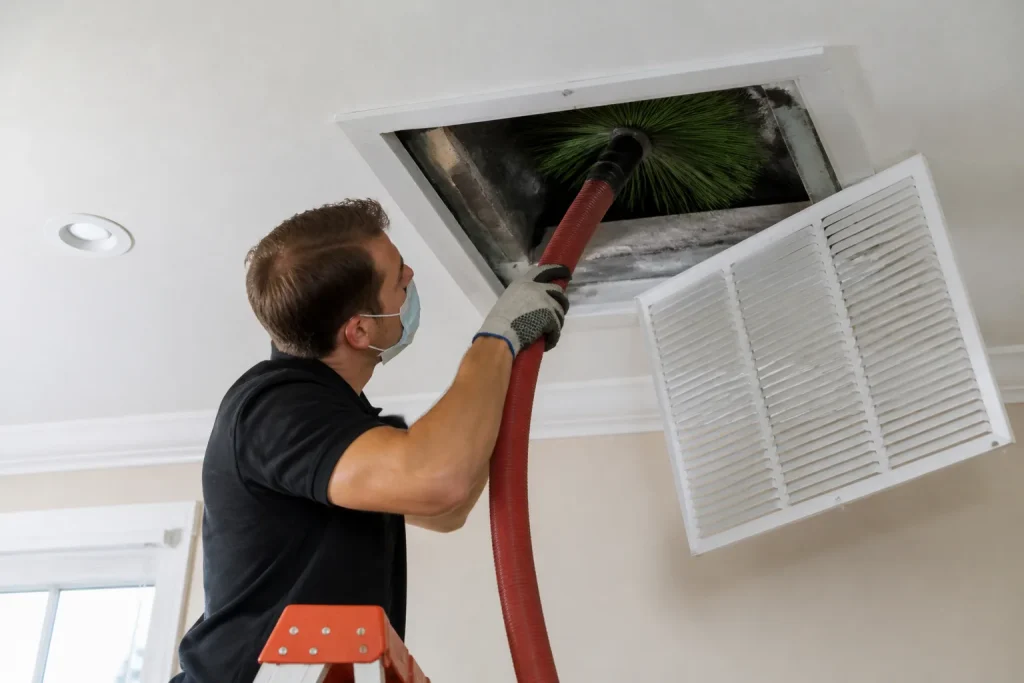
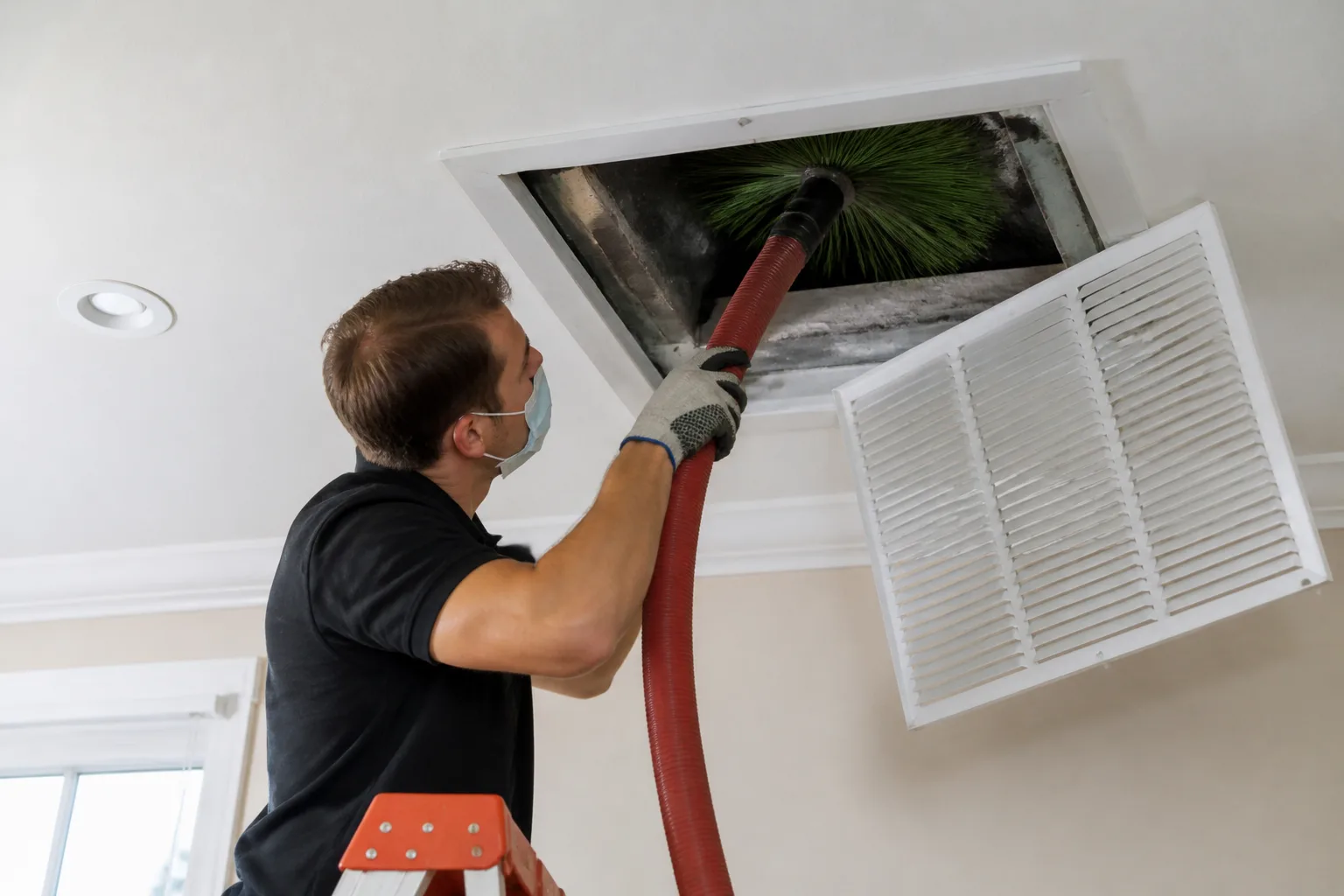
- Clean root to register. Rotary-brush cleaning with a Rotobrush system and negative-pressure extraction with Nikro equipment. This is where the actual debris leaves the system.
- Repair and seal. Loose joints, disconnected runs, and gaps at the plenum get sealed. A clean duct with leaks just pulls attic or crawlspace air back in.
- Sanitize where warranted. Targeted treatment, not a blanket spray, using Guardsman-line products where the assessment calls for it.
- Install or service the Honeywell equipment. New media filter, cleaned electronic cells, or a monitor set to log a baseline. This is the last step, and it should be.
A team that wants to install the air cleaner before the ducts are clean has the order wrong. An air duct cleaning that finishes with filtration setup is the sequence that holds up.
How do Honeywell air quality monitors prove a cleaning worked?
Honeywell air quality monitors give you a before-and-after particulate reading, which turns a cleaning from a claim into a measurement. That matters in Mott Haven, where steam heat radiators and older building envelopes can produce dust loads that vary block to block and floor to floor.
The process is straightforward. Before cleaning, the monitor logs a baseline over a stretch of normal occupancy: cooking, windows open or closed, heat running. After cleaning and after any filtration upgrade, it logs again under the same conditions. A real improvement shows up as a lower particulate count at the same times of day. A flat reading means something is still feeding the system, and the diagnostic work isn’t done.
Two cautions. First, a monitor measures the air in the room where it sits, not inside the ducts, so it’s an outcome measure, not a cleaning certificate. Second, a monitor reading can be skewed by a stove hood running, a window cracked open, or a neighbor’s renovation dust drifting in. Read it over days, not minutes.
We like the monitor approach because it settles the argument. It also pairs well with the before-and-after photos we take inside the ducts, since one shows where the debris was and the other shows what your air is doing now.
What’s different about cleaning around an electronic air cleaner?
Electronic air cleaner cells require handling that a standard duct cleaning doesn’t account for, and skipping it is one of the more common ways a job goes wrong. The cells are fragile, they hold a charge, and they should never be exposed to the same cleaning process as the duct walls.
- Power down first. The unit is de-energized before anything else happens. A charged cell handled carelessly is a shock hazard.
- Remove and wash the cells separately. They come out and get cleaned on their own, not blasted in place with a rotary brush.
- Protect the housing during duct cleaning. Negative-pressure equipment and brush heads stay clear of the air cleaner cabinet. Debris driven into the cell housing defeats the point of the cleaning.
- Inspect the contact plates and gaskets. Worn gaskets let air bypass the cells entirely, which quietly cancels out the filtration you paid for.
- Reinstall and verify. After the cells go back in, the unit’s indicator should confirm operation, and the monitor reading should reflect it.
Any technician working around Honeywell or Aprilaire equipment should know this sequence cold. If a crew treats the electronic air cleaner like just another section of duct, that’s a sign the scope of the job isn’t fully understood. The same care applies to HVAC cleaning, where the air handler and coil sit close to the filtration hardware.
Why does a Honeywell MERV rating mismatch matter in older Mott Haven buildings?
Because many older Mott Haven forced-air systems were designed for a low-restriction filter, and dropping in a high-MERV Honeywell media filter can strangle the airflow. The filter does its job beautifully and the system performs worse.
The mechanics are simple. A denser filter catches finer particles and resists airflow more. On a system with a blower sized for a thin fiberglass filter, that extra resistance shows up as reduced airflow at the registers, a blower working harder than it should, and sometimes a frozen coil in cooling season. The homeowner notices weak airflow and assumes the ducts are still dirty.
What we check before recommending a filter upgrade:
- The blower’s rated airflow and the filter slot’s dimensions, not just the filter that’s in there now.
- Static pressure across the system, which tells you how much resistance the ductwork already carries.
- Return air path size. Undersized returns are common in older buildings and compound the filter problem.
- Whether the duct system is sealed. Leaky ducts and high-MERV filters together make for a system that can’t breathe.
The fix isn’t always a lower MERV rating. Sometimes it’s a larger filter grille, a media cabinet with more surface area, or sealing the leaks first so the system’s resistance drops and the filter upgrade fits. Getting this right is why we assess before recommending. A filter that fights your system is worse than a modest one that works with it. If dryer lint is also on your mind, dryer vent cleaning is a separate fire-safety matter worth handling in the same visit.
When to call a pro
Some things are worth checking yourself: a filter that’s visibly gray, a register that whistles, a monitor reading that won’t come down. But a few situations need a trained technician with the right equipment.
- Your electronic air cleaner’s cells or contact plates are damaged or not seating properly.
- You’re considering a filtration upgrade and don’t know your system’s static pressure or rated airflow.
- Airflow at the registers is weak after a filter change.
- You suspect disconnected duct runs, especially in an older Mott Haven building where returns may not run where you’d expect.
- Your monitor shows elevated particulates that persist after a filter change and a cleaning of visible surfaces.
Working around the electrical components of an air cleaner or air handler isn’t a homeowner job. A trained technician handles the de-energizing, the cell handling, and the verification safely. Our technicians have up to 13 years of experience with this equipment.
Related services in Mott Haven: if you need the full system handled, we cover air duct cleaning in Mott Haven alongside dryer vent, HVAC, repair and sealing, and sanitizing work.
The Bottom Line
Honeywell equipment is the verification and air quality layer of a duct cleaning, not a substitute for one. The order matters: assess, clean root to register, seal, sanitize where needed, then install or service the Honeywell filtration and monitor the results. A monitor that logs before and after gives you proof, and a filter rating matched to your system’s actual airflow keeps the whole thing working. Skipping the sequencing or forcing a high-MERV filter onto an older system is how a good intention turns into weak airflow and a homeowner who’s sure the ducts are dirty again.
If you’re in Mott Haven and want a contractor who works fluently with Honeywell and Aprilaire systems, uses Rotobrush and Nikro equipment, and puts the results in writing, Air Duct Cleaning Mott Haven offers free estimates. Call (855) 658-4004. We answer 24/7. Fast dispatch from 7am to 7pm, Sunday through Friday. The price is set per job by a written estimate, and we take before-and-after photos so you see exactly what changed.
Frequently Asked Questions
No. Honeywell makes the filtration and air quality equipment installed on your system; a duct cleaning contractor cleans the ducts themselves. The two work together, and the right contractor knows how to clean around Honeywell equipment and set up filtration afterward.
You can, but it’s the wrong order. The air cleaner will spend its first months filtering what drifts past the contamination already in your ducts. Clean the ducts first, then install or service the filtration equipment as part of the same visit.
A Honeywell air quality monitor logged before and after, under the same conditions, gives you a real particulate reading. Pair that with before-and-after photos taken inside the ducts and you have objective evidence rather than a verbal promise. Ask any contractor to show both.
A denser filter resists airflow more, and older Mott Haven systems were often sized for a thin filter. Too much resistance shows up as weak airflow at the registers and a blower working harder. The fix is usually a larger filter surface, a media cabinet, or sealing duct leaks first so the system can handle the upgrade. Ask a technician to check static pressure before you buy.
Written by the team at Air Duct Cleaning Mott Haven.
Need Air Duct Cleaning Help?
Call Air Duct Cleaning Mott Haven - the local pro we connect you with is licensed and insured, with free written estimates in Mott Haven.
(855) 658-4004